

Customer queries are questions, complaints or requests raised by customers before, during or after a purchase. The best way to handle customer queries is to respond quickly, listen with empathy, give clear answers, set realistic expectations, track every interaction and follow up until the issue is resolved.
A sales rep at our company once had a rough call with a customer. Frustrated and overwhelmed, he vented on Facebook, blaming the customer. But when you’re dealing with customer queries, difficult conversations are part of the job. And while it might feel good to let it out, posting about it online doesn’t solve the problem. It only makes you look unprofessional.
As a customer support rep, your job is to handle the situation, not escalate it. Maybe the customer was rude, or maybe they were already frustrated from a past experience. Either way, the goal isn’t to assign blame. It’s to stay calm, fix the issue and improve how you handle such moments in the future. That’s what separates professionals from amateurs.
In this article, we’ll break down eight practical ways to deal with customer queries and turn them into loyal supporters.
Customers in 2025 are more aware than ever. If they have chosen your product or service, they expect only the best, regardless of the price they are paying you. So handling customer queries is as important, if not more, as selling your products.
Here are eight ways to handle customer queries:
A customer from telecrm once got frustrated because a promised feature was delayed. He kept calling the sales rep who had committed the deadline, but the rep, caught up in a demo and unsure how to respond, avoided the calls. Eventually, the customer stopped reaching out. A few days later, we got a negative review.

This is a common mistake. Many support representatives hope that if they ignore an upset customer, the problem will go away. But silence only adds fuel to the fire. The smarter move is to prioritise the complaint, respond with empathy and address customer concerns quickly.
Most customers won’t switch to a new platform over a small issue. What they want is someone to hear them out and offer a satisfactory resolution. When you respond to customer enquiries in a timely manner, you not only fix the issue but also show that your customer service team genuinely cares. That alone can turn frustration into trust and repeat business.
When a customer is upset, the first step is to respond quickly, acknowledge the issue and show that someone owns the resolution. Silence makes the problem worse, while timely communication can rebuild trust.
In the previous example, the delay in delivering a promised feature led to a frustrated customer, nonstop calls and eventually a public bad review. Most teams would panic, blame someone and try to move on. But we took a different route, we used the mistake as a moment to listen, learn and upgrade our systems.
Instead of only apologising, listen to the customer, record what went wrong, track the query in your CRM and use the feedback to improve your process. Mistakes become useful only when the team turns them into clear action. Include the issue, owner and final resolution in your customer data management process so the next agent has the full context.
When a customer says, “This is too technical,” your team might feel frustrated, especially if you’ve worked hard on making the interface intuitive. But brushing them off or replying defensively rarely helps. What seems like an irrational complaint could just be a cry for help. Maybe they’re not tech-savvy. Maybe their team is struggling to adapt. Either way, your job is to understand, not argue.
Most customer concerns aren’t about the literal words they use, they’re about what they’re really trying to say. “It’s too costly” could mean they don’t see the value. “We didn’t receive the invoice” could mean they’re having trouble locating it. Instead of assuming the worst, step back and ask: what does the customer actually need right now?
This approach changes everything. It allows your customer support agents to offer the right help, not just canned responses. With strong problem solving abilities and a little empathy, your team can provide accurate responses, prevent further problems and create a more positive customer experience across multiple channels. Even the most frustrated users will appreciate the effort when they feel heard and supported.
Related Read: Sales Automation: Definition, Strategies, Benefits & More for 2025
In the previous 2 examples, we discussed how we failed to deliver a promised feature on time and how it led to a crisis.
What if there was a way to make sure that the problem never occurred in the first place?
What if we have factored in and anticipated the technical delay and made sure that we keep a little extra buffer of time before promising a feature to the client?
Many customer support problems can be avoided when sales and marketing teams are clear and transparent about what they can and cannot promise.
Plus, if you do this the customers will get a clear picture of what they can and can’t get. And most customers will be able to make it work.
Sure, there will be a few people for whom a particular unavailable feature will be mission-critical and they will rightly get the choice to move to a different provider.
But if you over-promise and do not deliver, then that’s breaking trust!
And the thing about trust is that you can only break it once. Also, it reflects negatively on your integrity and that of your company.
Here are a few classic examples of overpromising and underdelivering
The biggest reason is that most support executives don’t realise that they can say
And here’s the most interesting part – when we promise to email you and respond within 24 hours, but then reply within a few minutes, you feel delighted and special!
Special enough to want to stick with your company for life and refer their friends and family! Because of your phenomenal service.
That’s the power of setting realistic expectations AND ALWAYS overdelivering.

Most salespeople are quick to follow up when they want to sell or upsell, but when a customer reaches out for help, they suddenly become “busy.” This kind of self-serving behavior damages trust. If you only show up when you need something, your customers will stop responding, stop referring and eventually stop buying.
Instead, flip the mindset. Genuinely support customers even when there’s nothing in it for you. Go the extra mile, offer help before they ask, share useful resources or check in after a problem is resolved. These small actions compound into a relationship built on trust.
This is what exceptional customer service looks like, not just solving issues, but proactively looking out for your customers’ success. And when you build that kind of relationship, you won’t need to push for referrals or reviews. Your customers will do it on their own, because they feel valued. That kind of loyalty can’t be bought, it’s earned through consistent care.
Nothing frustrates a customer more than being bounced between departments, repeating their issue over and over. It makes your business look disorganised and worse, like you don’t care. Even if your backend systems are complex, the experience for the customer should be simple.
A single point of contact makes the customer experience simpler because one person owns the issue, coordinates internally and keeps the customer updated until resolution. In B2B customer service, a named account owner keeps communication and responsibility clear.

I love RazorpayX; we use it to manage payrolls and vendor payments, and it works great. So when a friend who runs a hospital was struggling with payroll, I naturally gave a customer referral and recommended RazorpayX.
But what happened next was frustrating: their support team kept asking for the same documents again and again and tossed him around like a football for an entire month. It wasn’t until I called them out on Twitter that someone finally stepped in, called me and resolved the issue within hours.
This wasn’t the first time either. I had given a customer referral earlier too, and the exact same experience repeated itself.
Now, RazorpayX can afford to get away with this because they have a strong product and barely any competition. But chances are, you don’t. In a competitive market, you don’t have that luxury.
That’s why it’s absolutely critical to handle every customer referral with extra care. When someone refers you, they’re putting their own reputation on the line. If you fail to deliver, you’re not just losing a potential customer, you’re also damaging your relationship with the person who trusted you enough to recommend you.
And if that customer shares their bad experience in a blog post like this one, the harm to your brand can go far beyond one lost lead.
Related Read: CRM vs Spreadsheets India: Which One Is Better to Scale Your Business?
A customer once came to our site intending to renew his license, only to find that the prices had gone up. It wasn’t a big hike, yet he didn’t go through with the purchase. Instead, he took time out of his busy day to call me directly.
Why would someone call over such a small amount?
Because it wasn’t about the price. It was about trust. As a long-term customer, he expected to be informed in advance. A simple heads-up would’ve allowed him to plan better or even lock in a long-term deal before the change.
And here’s the frustrating part: we had sent out notifications, but missed him because his number wasn’t on WhatsApp.
Now imagine this happening at scale. A hundred loyal customers silently leaving because they feel blindsided by changes that weren’t communicated properly. That’s not just a communication miss, it’s a failure of excellent customer service.
Great service isn’t only about helping users when they face problems; it’s about anticipating those problems and fixing them before they occur. That’s how you resolve issues before they even show up as complaints.
Also, don’t wait for fallout. Use customer feedback as a signal, if one person speaks up, chances are ten others felt the same but stayed silent.
The fix is simple. Today’s tools make it easy to inform customers in advance, whether through WhatsApp, email or in-app notifications. With just a few clicks, you can avoid misunderstanding and reinforce the trust that keeps your customer base loyal.
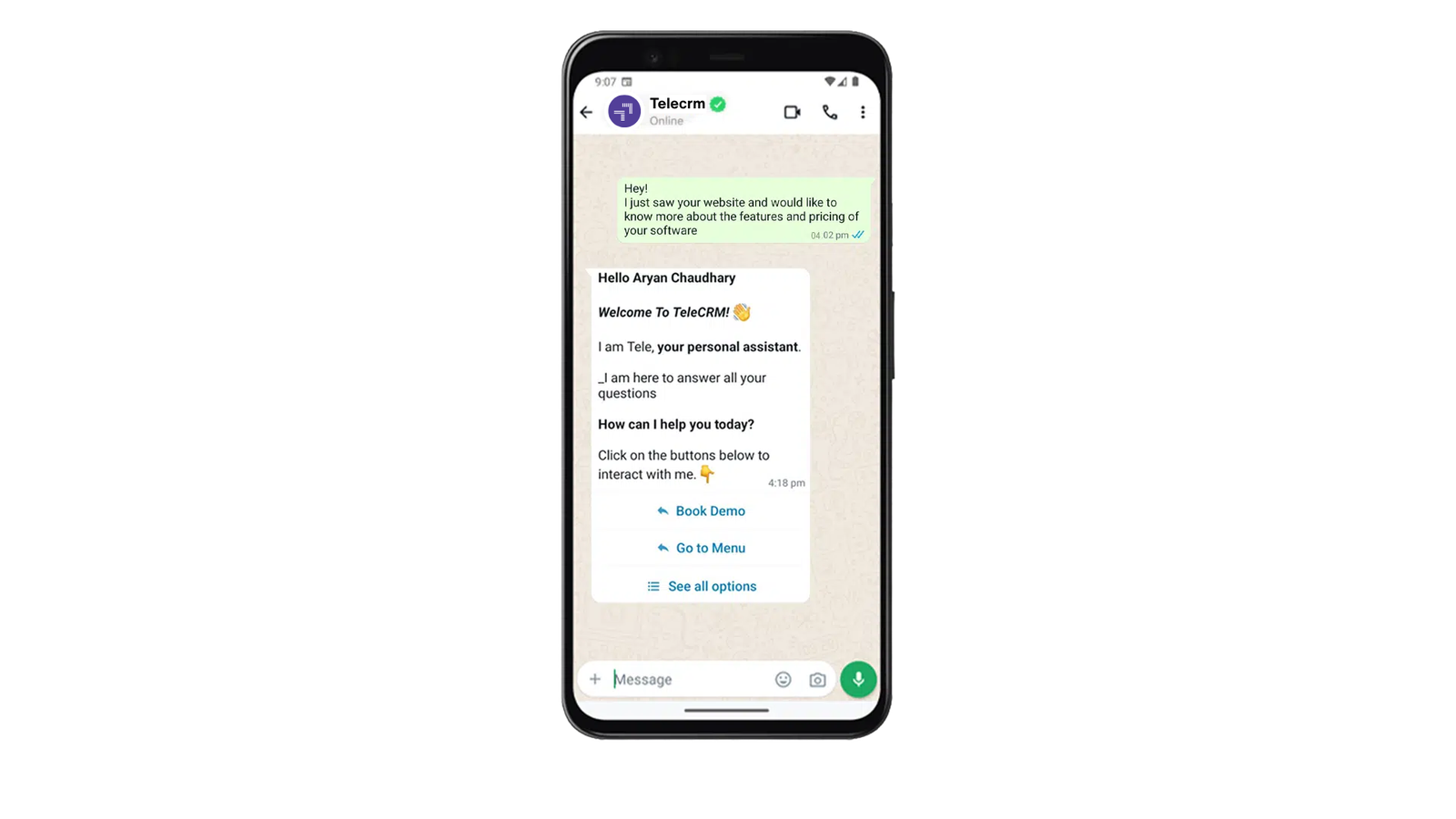
Pro Tip: Start handling customer queries with a CRM software like telecrm. You can set up a WhatsApp chatbot so customers do not have to wait for your team to be online. Common queries can be answered instantly, and WhatsApp notifications can be sent to multiple customers at once using WhatsApp API.
Ultimately a business makes money not just out of the revenue that it gets from customers but the relationships that create the ability for the revenues to keep coming.
And the best way to keep that relationship strong is to deliver a top-notch, memorable experience through and through for every customer. This means never letting it get to a point where an existing customer would be pissed off.
But when things do go wrong and customers become upset, the situation can still become an opportunity in disguise, as we have seen through the examples in this article.
Customer queries are questions, concerns or requests raised by customers during or after a purchase. These can be related to product features, pricing, delivery or usage. Addressing these queries effectively requires understanding customer preferences and responding in a way that shows you value their time and needs.
The best way to handle customer queries is by actively listening, understanding the context and responding with clarity and empathy. You must also analyse past customer interactions to spot patterns and improve your support system. Tools like CRMs help track these interactions and ensure no query falls through the cracks.
To handle complaints effectively, start by acknowledging the issue and assuring the customer that it will be resolved. Train your team to stay calm, take responsibility and offer a clear resolution. It’s also crucial to provide ongoing training to your support agents so they can handle tough situations and turn negative experiences into opportunities for building trust.
telecrm helps teams handle customer queries by tracking conversations, setting follow-up reminders, managing WhatsApp communication, using chatbots for common queries and keeping customer context in one CRM.



© Copyright 2026 telecrm.in (Flamon Cloudtech Pvt Ltd) - All Rights Reserved • Privacy Policy • T&C



© Copyright 2026 telecrm.in - All Rights Reserved • Privacy Policy • T&C