
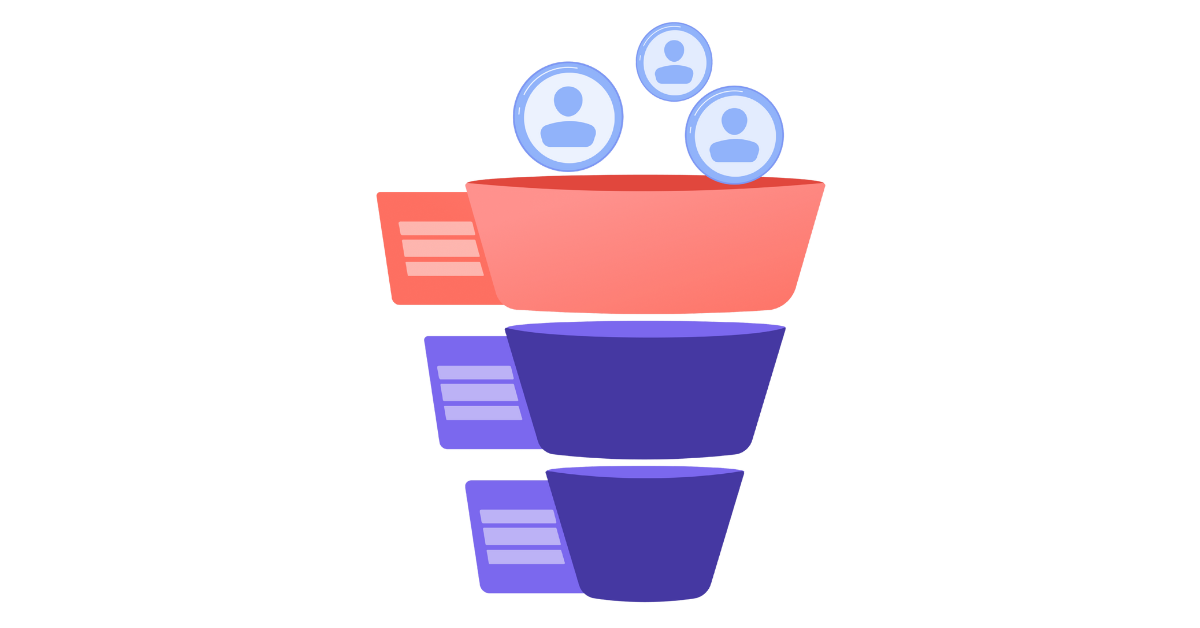
Insurance sales pipeline is the most crucial factor deciding whether your company is going to grow with consistency or struggle with unpredictable revenue. In an industry where customers think ten times before making any decision, your ability to guide the prospects through a clear and structured journey determines everything. A strong sales pipeline is the backbone of your entire process. It gives your team a shared framework, reduces confusions and ensures every prospect moves forward with purpose rather than chance.
We’ve witnessed many insurance companies misunderstanding pipeline as an internal tool while in reality it’s an experience your customers feel. With a more organised pipeline, the prospects perceive your communication as more relevant which builds trust and eventually helps them in making faster decisions. In addition to this, one obvious advantage is that you’re always going to stay ahead of your competitors if you’re able to build a sales funnel that’s seamless for both your team and the clients.
In this blog, we’re going to talk about everything you need to know about creating an insurance sales pipeline that helps your company succeed in an ever-evolving market.
Let’s get started!
In an ideal pipeline, every stage has a purpose. Each one helps you move a prospect from curiosity to complete confidence. Let’s walk through these stages together.
Generating relevant leads is the most important part of building an effective pipeline. This stage is where your entire funnel starts. If you mess this stage, it’ll act as a domino effect and will impact the entire sales pipeline. If you’re not able to attract the prospects who are genuinely interested in your product, you’ll most likely end up pushing your team into hours of wasted effort gone into conversations or pitches that head nowhere.
Therefore, it’s essential that you attract the right leads. Following are some ways in which you can generate quality leads without investing much of your budget –
Once you’re able to organise your lead generation workflow, half of the work will already be complete and this would also set up a strong foundation for the future stages and interactions with the customers.
Once you’ve acquired the leads, the next step is figuring out who’s truly ready to engage.
Qualification helps you to identify opportunities from casual enquiries. When done well, it saves your team hours of chasing the wrong people and cut down on administrative tasks.
Agents usually assess the following aspects to segregate the potential clients :
A good qualification ensures your energy goes into the right conversations and not endless dead ends.
This is where the long-term relationship really begins. You assess the client’s needs and identify the scope for strong relationships.
In this stage, you’re not selling, you’re listening. You’re understanding who your customer is, what’s important to them and what risks they want to protect themselves from.
A strong needs assessment explores:
When customers feel heard, they trust you more, and that trust makes the rest of the journey much easier.
By the time a customer reaches this stage, they’re usually evaluating competitors and looking for clarity.
This means the way you present your proposal matters just as much as the pricing and other factors.
A strong proposal includes:
Your vital role here is to help them feel confident, not confused, with clear communication and valuable insights.
Insurance is rarely an instant decision. Prospects need time, and your job is to stay present and provide ongoing support without becoming pushy.
Effective nurturing looks like:
This stage keeps momentum alive and builds trust throughout the decision-making process. You can also enhance the efficiency of your team member in this phase through insurance workflow automation and ensure that they save their valuable time in closing leads and developing strategies for long-term relationships.
At the closing and policy issuance stage, everything starts coming together.
A smooth closing experience should feel simple and supportive. It often includes:
A seamless customer journey leaves a lasting impression and sets the tone for your ongoing relationship, essential for retaining clients.
A common misconception is that the sales journey ends after the policy is issued. In reality, this is just the beginning of a long and meaningful customer relationship.
Good post-sale management includes:
When people see you as a partner, not just a salesperson, client retention and referrals grow naturally.
Related Read: 30 Proven Sales Closing Techniques to Win More Deals
When every stage is clear, intentional and easy to follow, your team moves with confidence, your customers feel supported and your overall performance becomes far more predictable.
Without structure, everything starts to feel scattered and reactive, which shows up quickly in dropped leads, stalled conversations and missed opportunities.
Here’s why a strong pipeline makes such a big difference:
Related Read: 80+ Sales Interview Questions to Crack Your Next Sales Role
Even with the best intentions, insurance sales pipelines don’t always run as smoothly as we’d like. Leads stall, follow-ups get delayed, proposals sit untouched. The good news is that most challenges are fixable with a few simple shifts in process, communication or tools.
Here are the most common issues teams face — and how to address them without overcomplicating things.
When the top of the funnel is filled with leads who aren’t genuinely interested or eligible, everything slows down.
How to fix it:
A stronger filter saves your team time and boosts conversion rates dramatically.
This is one of the biggest reasons good leads go cold. Lack of timely follow-up makes prospects feel forgotten or unimportant.
How to fix it:
Small, well-timed touchpoints make a big difference. Tools like Telecrm can be your saviour in this scenario, helping you ensure no follow-ups are missed. Your sales professionals can ensure a seamless customer relationship management with this tool and sell the insurance products more efficiently.
Related Read: 10 Key Insurance CRM Features to Know Before Choosing a CRM
Manual tracking, updating spreadsheets and chasing documents can pull agents away from real selling.
How to fix it:
Freeing up admin time gives your agents more space to build relationships.
Generic messages, proposals and broad or unclear communication rarely build trust.
How to fix it:
While there may be multiple pitfalls of setting up a sophisticated sales pipeline, there’s always a solution to make the outcomes better with technology, effort and better management.
Building and optimising your insurance sales pipeline is not rocket science. If you’re able to set up a structure internally, use the right tools and are able to execute the entire workflow seamlessly, you’ll be able to close more deals in no time. This will not only help you increase the revenue but will also enhance word-of-mouth, attracting more prospects than ever.
When each stage flows without any disruption, your team will start working on an auto-pilot mode where they start leading every conversation with confidence. Customers would rather feel supported instead of overwhelmed and as a result your pitch is going to become far more impactful.
Well, we also acknowledge that there can always be challenges. More often than not, admin tasks could slow down your team, follow-ups may get delayed or leads might just be in their exploration stage, but none of these are actually going to be your roadblocks; they’re simply signals that your pipeline needs refinement. At its core, a well-built and executed sales pipeline starts with creating clarity for your team, customers and the entire business as a whole. It ensures that you don’t miss out on any opportunity that could convert a prospect into your paying customer.
And if you’re looking for a tool that helps you bring this entire journey together, telecrm gives your insurance team everything they need to manage the pipeline with confidence and consistency. Book a free demo today.



© Copyright 2026 telecrm.in - All Rights Reserved • Privacy Policy • T&C



© Copyright 2025 Telecrm.in - All Rights Reserved • Privacy Policy • T&C