

Sales pitching sounds like a basic skill. Yet, it is one of the most misunderstood parts of selling.
Many salespeople struggle because they are unclear about what a sales pitch is actually meant to do. Some memorise scripts. Others talk endlessly about features. Some hesitate, unsure of how to start or what to focus on. The result is often the same — a sales conversation that goes nowhere.
The bigger issue is not effort or intent. It is not understanding that a sales pitch exists to keep the conversation moving in a way that encourages the other person to open up. This ability is not built overnight. It develops through practice and by paying attention to how real conversations unfold.
That is also why a sales pitch is rarely a single line or a fixed script. It shows up in how you respond, how you handle pauses and how you decide what to say next without forcing the conversation. These small moments shape the pitch and improve gradually, call by call.
Once this becomes clear, selling starts to feel more natural and less stressful. And that clarity begins with understanding what a sales pitch actually means.

A sales pitch meaning is a short, clear explanation of what you are selling, who it is for and why it is useful to the buyer, delivered in a way that sparks interest and encourages the next step.
At that moment, the prospect should be able to understand three things without effort:
If this clarity is missing, the conversation goes nowhere.
A sales pitch definition should give direction to the discussion. When it is clear, both sides know why they are talking and what should happen next. That is why a good sales pitch focuses on a single point, one problem and one reason to continue. Everything else comes later.
A sales pitch and a sales presentation are often confused, but they serve very different purposes.
A sales pitch exists to start a conversation. A sales presentation exists to explain things in detail. Mixing the two too early is where many sales conversations break down. In many cases, using tools like an AI presentation maker can help structure these presentations more clearly, but they should still be introduced only after the initial pitch has created interest.
Sales pitch:
Sales presentation:
If you start your conversation by listing features and benefits, the conversation quickly becomes overloaded with information, even before you’ve captured the prospect’s interest.
That’s why you should always start with a full sales pitch to set the direction for the conversation, then give a sales presentation to focus on depth.
Once the difference between the two is clear in your head, your conversation becomes lighter, more natural and more likely to move forward.
From the buyer’s side, a sales pitch shows up much earlier than most people realise, as the prospect would have already researched the product you offer and also started to compare options.
At this point, prospects are still trying to understand whether your product or service can be useful to them; that’s when the sales pitch comes in and helps them to decide.
That is why a sales pitch usually happens during the first contact. It could be a cold call, a short message or the opening of a follow-up meeting. The pitch gives the prospect a simple reference point about the product and how it might help them.
As the buying process moves forward, the role of the sales pitch changes with it. Once the prospect understands the product or service value, the conversation naturally shifts to details, comparisons and next steps as needed. This is where sales presentations and deeper discussions take place.
In simple terms, a sales pitch helps move a buyer from curiosity to consideration. It is not closing the deal, but without it, most buying journeys never move forward.
Once you understand where a sales pitch fits in the buying process, it becomes easier to break down what a great sales pitch actually looks like.
A strong sales pitch follows a simple structure. It is a focused message designed to help potential customers quickly understand the value of your product or service.
The basic structure of a great sales pitch can be used to create sales pitch templates for different situations, which include four key parts:
When these elements come together, the sales pitch feels natural and focused. It helps sales reps guide the conversation without overwhelming the prospect with unnecessary details.
Once you understand the basic structure of a great sales pitch, the next step is to understand the different types, which depend on the situation, the person you are speaking to and where they are in the buying process.
Below are the most common types of sales pitches used by sales teams in real situations, along with simple, real-world sales pitch examples.
An elevator pitch is a very short sales pitch, usually delivered in under 30 seconds. It focuses on one clear customer problem and one clear solution to it. This type of pitch is useful when you have very little time or when you are meeting someone for the first time.
Example: “We work with small sales teams that struggle to track follow-ups across calls and messages. We help them keep every lead and conversation in one place so nothing slips through.”
The goal here is not detail. It is just enough clarity to spark interest and invite the next question.
A cold call pitch is used during the first contact with a prospect who may not know your company’s details. The goal is not to sell, but to earn prospects’ attention and to continue the conversation, which may include the prospect’s pain point, which may make the prospect curious to know more details about the product.
Example: “Hi, this is Rahul calling from a CRM company. We help real estate teams reduce missed follow-ups from site visit leads. I’m calling to see if this is something you’re currently dealing with.”
If the prospect relates to the problem, the conversation moves forward. If not, you exit politely.
A value-based pitch focuses on outcomes instead of features. It explains how your product or service can help them solve a specific problem they are facing, and how it can do that hassle-free, without making it complicated.
Example: “Most support teams we work with spend hours switching between tools just to respond to customers. We help them manage calls, WhatsApp messages and follow-ups from one place, which saves time and improves response rates.”
Here, the pitch connects the solution directly to a result the prospect cares about.
A follow-up pitch builds on a previous conversation base. It is more specific as here we are having a previously discussed base about the product and we can often refer back to what the prospect shared earlier.
Example: “Last time we spoke, you mentioned that leads often go cold after the first call. I wanted to show you how our system helps sales reps follow up automatically so those leads don’t drop off.”
A follow-up pitch feels relevant because it continues an existing thread rather than starting a new one.
This pitch is used later in the sales process. It sets the context for a sales presentation or demo and helps the prospect understand how the product or service can make their life easier and what they will see.
Example: “Today, I’ll show you how your sales team can track every lead from the first call to the final deal. We’ll focus on follow-ups and reporting since those were the main challenges you mentioned.”
This pitch aligns expectations and keeps the discussion focused.
Each type of sales pitch serves a different purpose. When used at the right moment, they help keep conversations clear, relevant and moving toward the next step.
No matter which type of sales pitch you use, certain basics decide whether it works or not. A good sales pitch is not about saying more. It is about saying the right things at the right time to the right person.
When these elements are in place, the sales pitch feels helpful rather than pushy. It creates interest, builds clarity and keeps the sales process moving forward.
Just as there are things that make a good sales pitch work, there are also mistakes that quietly break it. Most sales pitches fail not because the product is bad, but because the approach pushes the prospect away.
Avoiding these mistakes makes the sales pitch feel more human and more effective. It keeps the conversation focused, respectful and aligned with how people actually make buying decisions.
A sales pitch works only when it feels relevant to the person listening.
Personalisation is not about using a prospect’s name once. It is about understanding their needs, roles, industry and the challenges they face every day. When a pitch reflects the prospect’s context, it feels more natural and easier to trust.
Doing basic research helps avoid generic statements. It helps decision makers respond better when the sales pitch focuses on outcomes and impact that solve their problem, not big claims about the future.
Also, adding industry-specific context quickly shows that the pitch is meant for the specific person you are talking to and not that it is centralised for everyone.
When prospects hear examples from other clients, practical expert advice, and see that you understand their situation at a personal level, the pitch feels more trustworthy and relevant.
A sales pitch does not improve just by practice. It improves when sales teams learn from past conversations and apply those learnings to future ones. That requires visibility, context and consistency.
This is where a CRM plays a meaningful role. A CRM helps sales teams capture real interactions and refine their pitches instead of relying on memory or assumptions.
By storing call recordings, chats, follow-ups and deal stages in one place, a CRM gives sales reps full context before every conversation.
With tools like telecrm, this context stays connected across calls and WhatsApp conversations, making sales pitches more relevant, better timed and easier to build on.
Below are the key ways a sales CRM helps sales pitches improve with every interaction.
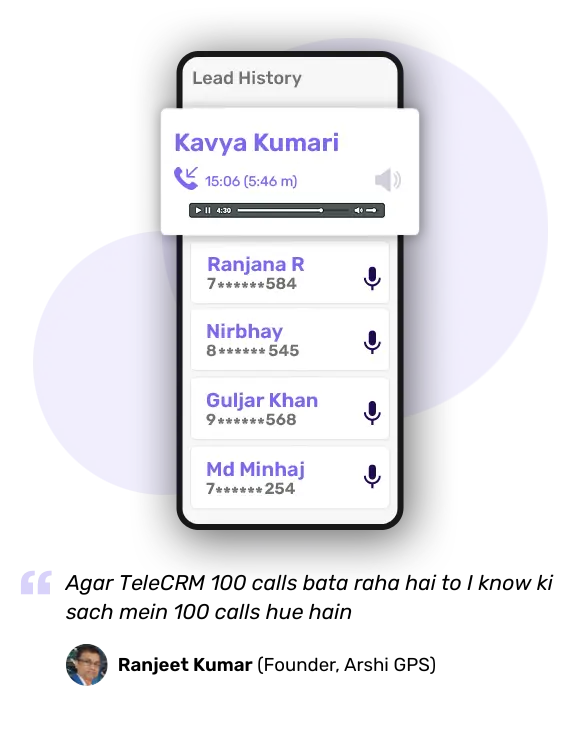
telecrm call recording feature helps you easily know what was discussed during the first call, which is often the initial sales pitch. It captures call history and notes so sales reps do not have to rely on memory. It also gives managers clear visibility into what was discussed and where the prospect currently stands.
This avoids repeating the same pitch or asking the same questions again. Every follow-up builds on the previous conversation instead of starting from scratch each time.
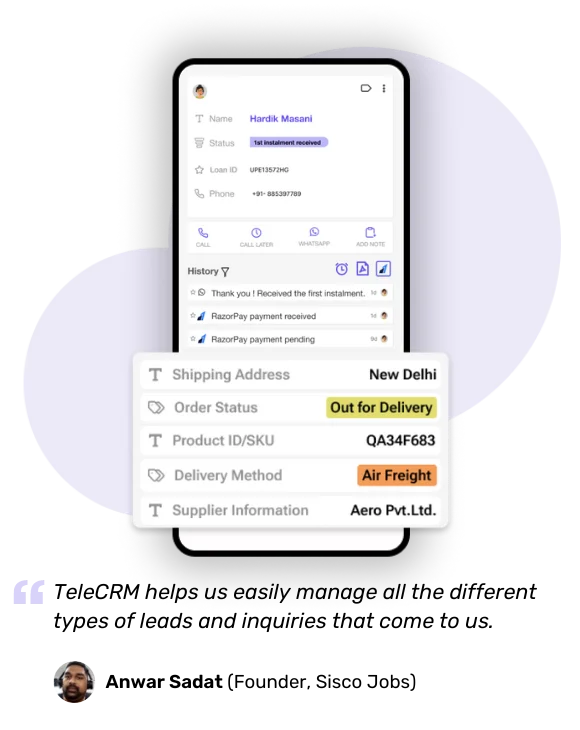
Personalisation becomes much easier when sales reps can see past conversations. Instead of starting fresh every time, the next conversation is shaped by what was already discussed.
telecrm makes it easy by showing what the prospect has shared earlier, including their role, concerns and responses. With this context, sales reps can tailor the sales pitch to the person in front of them. The pitch no longer sounds generic. It feels relevant, timely and grounded in the prospect’s actual situation.
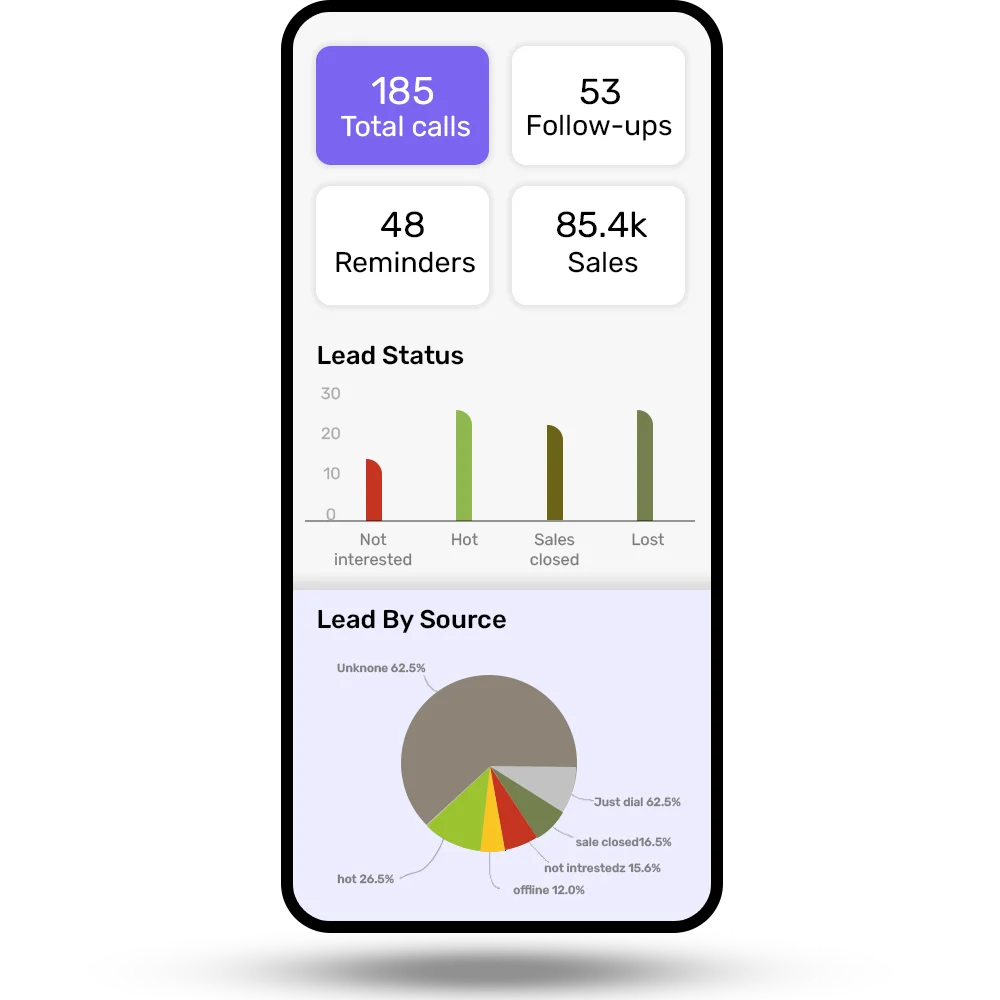
telecrm shows where a prospect currently stands in the sales process, whether they are at an early stage, evaluating options or ready for a follow-up meeting. CRM makes it visible just in one click under the prospect’s profile.
This helps sales reps adjust their sales pitch based on the buying process, instead of using the same message at every stage. The conversation stays relevant and better timed.
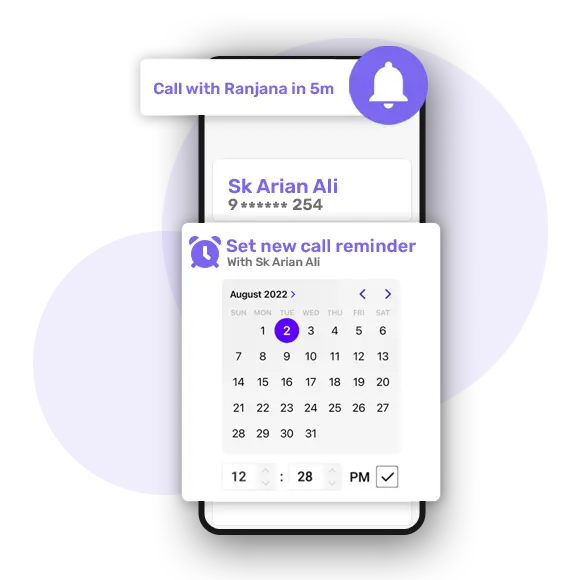
telecrm timelines and reminds sales reps to send follow-up pitches at the right time. This ensures the conversation continues when the prospect is most likely to respond.
When follow-ups refer back to earlier discussions, they feel natural and purposeful. Instead of sounding random or pushy, they feel like a continuation of the same conversation.

Over time, telecrm starts to show which sales pitches lead to better responses and which ones fall flat. This gives sales teams a clear view of what is actually working.
Instead of relying on guesswork, sales reps can refine their sales pitch based on real outcomes across prospects and different industries, improving every conversation over time.
By bringing structure and continuity into every interaction, telecrm helps sales teams move from one-off pitches to consistent, well-timed and effective sales conversations.
The sales pitch is simple: how you explain your product or service in a way that feels clear, relevant and worth the buyer’s time. A good sales pitch focuses on one problem, shows value to the buyer and moves the conversation forward.
A strong pitch should feel like a compelling narrative, spoken to a real person, not a script repeated to potential clients.
In today’s sales environment, pitches need to be short, personalised to the person and delivered at the right time. This is where a CRM plays a key role, providing sales teams with context and consistency across conversations. It not only brings clarity and transparency to the sales process but also saves a lot of time that would otherwise be wasted on manual work.
With telecrm, sales teams can track everything in one place, which makes every pitch more on point and results in won deals.
So what are you waiting for? Book a demo with us or visit our homepage now!



© Copyright 2026 telecrm.in - All Rights Reserved • Privacy Policy • T&C



© Copyright 2025 Telecrm.in - All Rights Reserved • Privacy Policy • T&C