

Would you consider your current calling system smart? Sure, it might be decent, but is it efficient?
What usually works ‘great’ doesn’t mean it’ll be good enough to keep up once things start to change and get harder to manage.
Not being able to answer these questions is usually the point when teams realise the issue isn’t efforts, it’s the system.
A virtual phone number gives businesses a more reliable way to handle customer calls as they scale.
This guide breaks down how it works, when it makes sense to switch and what changes once your calls are organised.
A virtual phone number is a business number that doesn’t sit inside one SIM card or one mobile phone. Instead, it runs through the internet using cloud telephony. In much simpler terms, the number isn’t tied to anything physical, it simply lives online as a cloud-based telephone number.
How this works is when someone calls your virtual number, the call first reaches a cloud system, which from there can ring multiple team members or follow an IVR menu, it all depends on what path you want your virtual phone number to follow in accordance with your business needs. All it needs is a strong internet connection.
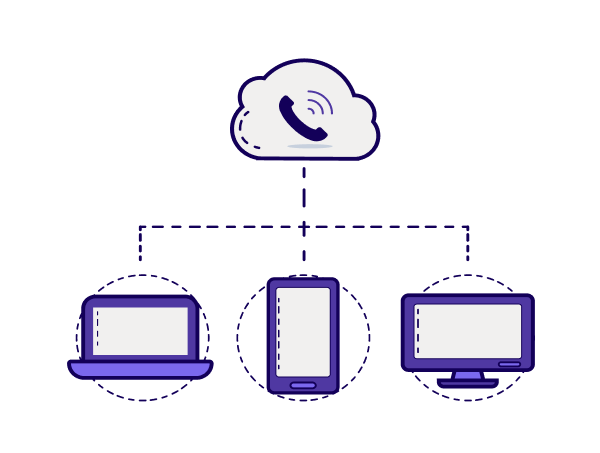
To your customers, it feels like a normal phone call. Internally, the system handles all the routing, forwarding, history logging, etc. and that’s the real difference. You are no longer required to attend every incoming call or note down each call that ends up as missed.
By reducing manual labor and mental strain, switching to virtual phone numbers has become the new way of handling business communications seamlessly.
Not all virtual numbers are the same. Depending on your business needs, you can choose from different types:
The type you choose depends on where your customers are and how you want your brand to appear: local, nationwide or global.
Before deciding whether virtual phone numbers are right for your business, you must understand who they’re meant for and how they help:
Virtual phone numbers make the most sense for businesses where calls are central to how revenue, coordination or customer experience functions.
You’ll benefit most if:
In many Indian businesses, growth happens before systems are redesigned. Teams expand, cities are added, roles change but the phone number remains stuck in one device.
Related read: Team Management: Definition, Types & 15 Tips to Manage a Team [2026]
The shift to virtual numbers isn’t about replacing regular numbers, it’s about upgrading your communication system for growth. Because once teams start growing, the pressure point doesn’t simply end at missed calls, it also adds coordination gaps, visibility gaps and ownership confusion as well.
Having a virtual phone number centralises business communication because the number stays constant even when employees change.
Over time, that stability compounds. Brand presence becomes consistent and operational friction reduces.
Regardless, it’s useless unless you know exactly when a regular number stops being enough.
Businesses don’t switch because they want to, they switch because coordination starts breaking.
You might be reaching that point if:
That’s the stage where communication needs infrastructure, not improvisation.
Do virtual phone numbers work from a legal and regulatory standpoint in India?
Let me answer this in the simplest way possible:
Yes. Virtual phone numbers are fully legal in India when issued by TRAI-compliant telecom providers and used as per regulatory norms.
In India, virtual phone numbers operate under the regulatory framework set by the TRAI, Telecom Regulatory Authority of India. Which simply means businesses can use them legally, provided the numbers are issued and managed by authorised telecom operators or virtual number providers licensed by the DoT, Department of Telecommunications.

In India, telecom resources like phone numbers are allocated only through DoT-licensed telecom operators. Virtual number providers typically work in partnership with these licensed operators, which is what keeps the system compliant.
So no, virtual numbers are not ‘grey area tech’. They operate within the same telecom ecosystem as regular numbers but are simply smarter.
Just like getting a sim card, virtual phone numbers also require KYC. Businesses need to submit basic documents and complete steps like SMS verification or a link with a verification code to confirm business details to verify ownership and usage.
This might feel like a small extra step, but it’s actually a good thing. It keeps misuse in check and ensures the number is officially registered to your business, not floating around without accountability.
The exact documents required may vary depending on the provider and the type of number you choose. In most cases, businesses are asked to submit documents like PAN, GST certificate (if applicable), company registration details and authorised signatory proof, since business numbers are issued under regulated telecom norms in India.
This is where the right provider choice quietly impacts how reliably your calls run.
A compliant provider ensures:
Non-compliant setups may seem faster or cheaper upfront, but they often come with risks businesses don’t want to deal with later.
Choosing a provider that follows TRAI norms and KYC processes means you get the benefits of virtual calling without worrying about legal issues or interruptions.
Once that’s done, you’re free to focus on what actually matters: handling calls better while growing your business.
Getting a virtual phone number is a lot less complicated than it sounds, whether you need local numbers, a toll-free number or international virtual numbers. Set up is usually straightforward. If you can sign up for a subscription online, you can set this up too.
The first step is choosing a provider, and this part matters more than people realise.
With this step you’re choosing how smoothly your calls will run. A good provider should be TRAI-compliant, should follow proper KYC processes and offer reliable support when you need it.
Beyond compliance, look for something that fits how your team works. There are plenty of virtual number providers in the market, and each comes with different features. So it’s important to choose one that aligns with how your business actually operates and what you expect from your calling setup. It is meant to make day-to-day call handling smoother, not more complicated.
In short: don’t overthink it, but don’t cut corners either.
Once you’ve picked a provider, setup is usually straightforward. You sign up, complete KYC, choose a plan and your virtual number is activated.
From there, you decide how outgoing and incoming calls should flow. Who picks up first, where calls go if someone is busy, how inbound calls are handled and when or who to forward calls to automatically. Most of this is configurable in a few clicks without manual intervention or changes to your physical setup.
Though activation timelines can differ. Some providers offer faster e-KYC verification, while others may take a few hours or a working day if manual document review is involved.
The best part? There are no new patterns to learn for your customers. They call your business the same way they always have. Your team just starts connecting and receiving calls in a more organised way.
Virtual phone numbers typically work on a subscription model. You pick a plan based on team size or call volume and adjust as your business grows.
Once you’re live, that’s it. Your number is up and running. Calls start coming in, data starts getting logged with detailed analytics and your calling setup quietly starts doing its job in the background.
No drama. No long onboarding. Just a cleaner way to handle business calls.
Once you decide to explore virtual phone numbers, here are a few well-known virtual number providers offering local numbers and advanced features in the Indian market:
An India-focused virtual calling and CRM platform designed primarily for SMBs, startups and sales-driven teams. CallerDesk combines cloud telephony with lightweight CRM capabilities, making it suitable for businesses that want calling and lead management in one place.
Features:
Pricing: Positioned for SMBs with mid-range SaaS pricing and demo options available.
Exotel is one of India’s more established cloud telephony platforms, used by startups, enterprises and large customer-facing teams. Known for scalable infrastructure and high call reliability across industries like e-commerce, fintech and healthcare.
Features:
Pricing: ₹1,500–₹4,500 user/month
Aircall is a global cloud phone system popular with remote and distributed sales/support teams. It focuses heavily on CRM integrations and analytics, making it ideal for businesses already using international SaaS tools.
Features:
Pricing: $30 per user/month
A long-standing cloud communications provider in India with strong enterprise adoption. Knowlarity offers AI-driven call management, automation tools and omnichannel capabilities.
Features:
Pricing: ₹999–₹3,999+ user/month
A contact-centre-focused cloud telephony solution built for businesses handling high call volumes and complex workflows. Ozonetel is often used by enterprises that require structured call distribution and performance monitoring.
Features:
Pricing: Custom pricing based on usage
A virtual phone number by itself is a great start, but the real value shows up when that number is connected to how your team actually works every day. This is where integrating your virtual number with a CRM like telecrm becomes useful.
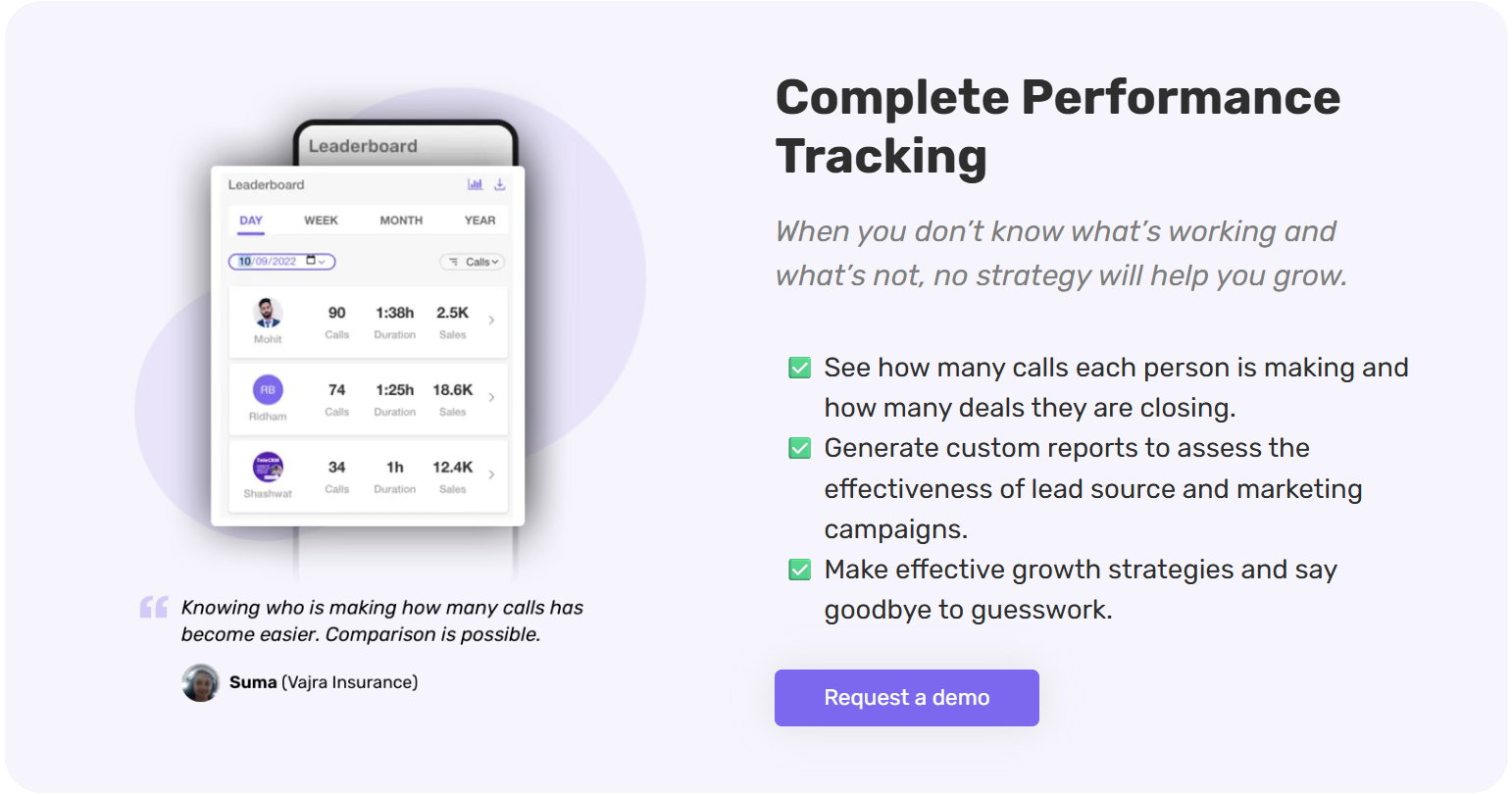
telecrm doesn’t treat virtual numbers as just an incoming line. Every customer conversation becomes part of a larger workflow. They don’t just get answered, they are logged, tracked and tied to real outcomes like follow-ups, deals and conversations.
Instead of call conversations living in isolation, they become action points your team can actually work with.
When it comes to integrating a virtual phone number with telecrm, there are usually two straightforward paths.
If telecrm already has a native integration with your virtual phone number provider, the setup is simple. You follow a few guided steps, connect the number and you’re good to go. It’s largely plug-and-play, with calls starting to log automatically once the integration is active.
If your provider doesn’t have a native integration but offers an Open API, that works too. In this case, the API is connected to telecrm so call data flows into the system.
However, if a provider offers neither native integration nor an Open API, then integration isn’t really possible. Calls stay outside the CRM, and you lose visibility, tracking and ownership.
In short, as long as the provider supports either native integration or Open APIs, once the virtual number is integrated with telecrm, everything starts falling into place.
The calling system starts working for the team instead of the other way around. This makes it easier to track conversations over time and avoid losing context amongst customer interactions.
Related read: Role of CRM in Managing Multichannel Sales for SMBs [2026]
Beyond virtual calling, telecrm brings everything under one roof.
The result is impactful, like fewer missed calls, better follow-ups and consistent conversations with customers.
With telecrm, scattered customer conversations finally come together. It makes sure every conversation is captured, organised and can contribute to growth.
Make every call count with telecrm, Book a demo to see it in action.
Your business number stops being a liability and starts becoming an asset.
It no longer leaves you dependent on one person’s phone. Once teams start to grow or people start to move on, conversations don’t end up disappearing with them. The number stays yours and no data walks out the door.
That’s really at the core of what virtual telephony offers: a stable foundation.
With an entire calling setup that’s reliable and strong, it’s time you switch to unlock your businesses full potential.



© Copyright 2026 telecrm.in - All Rights Reserved • Privacy Policy • T&C



© Copyright 2025 Telecrm.in - All Rights Reserved • Privacy Policy • T&C