
Sales is one aspect of your business that always needs to be tracked and optimised. And why not? After all, it is the function that directly drives revenue and keeps the business moving forward. Staying ahead of the curve means ensuring that every process is in place and performing as it should. But how do you do that?
One of the most effective ways is by closely tracking your sales team’s performance — understanding what they excel at, the challenges they face and which sales representative is best suited for which project. All of this needs clarity and structure. This is where sales employee tracking apps come in and that’s exactly what we’ll be exploring in this blog.
By the end of this read, you’ll have a clear understanding of what a sales employee tracking app is, why traditional tracking methods are no longer effective, how these apps can support business growth and how to choose the right one for your team.
Let’s get started.
A sales employee tracking app is a mobile or web-based platform that helps managers track and manage sales reps’ daily work in real time. It records activities such as attendance, calls, client visits, assigned tasks, routes, follow-ups and performance metrics in one place.
This gives sales leaders reliable visibility into field and remote teams without depending on end-of-day reports, spreadsheets or scattered WhatsApp updates.
For years, businesses have relied on traditional methods to track sales activities. These approaches may have worked when teams were smaller and operations were simpler, but they struggle to keep up with the pace and complexity of today’s sales environments.
Common traditional sales tracking methods include manual daily or weekly reports, spreadsheets and Excel sheets, phone call check-ins, WhatsApp updates, end-of-day summary emails, e.t.c. While these methods are familiar, they depend heavily on manual inputs and delayed reporting, making them increasingly ineffective for modern sales teams.
The core issue is that these methods fail to provide timely, accurate and actionable insights. As a result, sales leaders face several challenges that limit performance and growth:
Because updates are shared after the work is done, managers lack real-time insight into sales activities. This delay prevents timely course correction and reduces the ability to respond to missed opportunities or underperformance.
Manual reporting varies from one sales representative to another, leading to inconsistent data. When information cannot be standardised or verified, it becomes unreliable, making performance evaluation and forecasting inaccurate.
Traditional tracking methods often require sales representatives to spend significant time preparing reports, updating spreadsheets or sending manual updates. This administrative workload takes away valuable hours that could otherwise be spent meeting clients and closing deals.
When sales teams focus more on reporting than selling, productivity drops and overall performance suffers. The more time spent on manual tasks, the less time available to generate revenue, directly affecting the effectiveness of the entire sales function.
As teams expand or operate across multiple locations, spreadsheets and manual updates become difficult to manage. These methods lack the structure and flexibility needed to scale alongside business growth.
When sales data is delayed or scattered across multiple sources, you do not get a complete picture in time. By the time issues become visible, the opportunity to correct them may already be lost.
Instead of preventing problems, you are then forced to respond after targets are missed or deals fall through. This reactive approach reduces the ability to provide timely coaching, refine strategies or continuously improve performance.
While sales employee tracking apps provide the foundation for better visibility and decision-making, the real impact comes from using a system that brings all sales activities into one organised platform. A platform like telecrm helps businesses streamline sales management while giving managers complete visibility into their team’s performance.
Sales employee tracking apps like telecrm provide managers a clear view of what their team is doing throughout the day. You can monitor productivity without relying on manual updates through features like automated employee attendance and the number of calls made by each representative per hour.
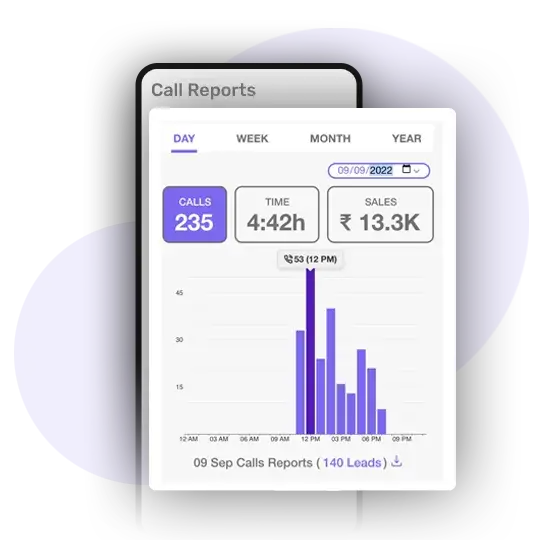
When tracking is based on real activity data rather than manual reports, forecasting becomes more accurate. Businesses can better estimate revenue, plan resources and set achievable targets using data that reflects actual sales effort on the ground.
Instead of digging through spreadsheets, telecrm provides visual dashboards that show key metrics such as total sales calls, revenue generated per sales representative and individual activity performance. With call charts and leaderboards, you can quickly understand who is performing well and where improvements are needed.
With built-in workflows, telecrm automatically notifies sales representatives whenever a new lead is assigned to them. This ensures that no lead goes unnoticed and that teams can start engaging with prospects immediately.
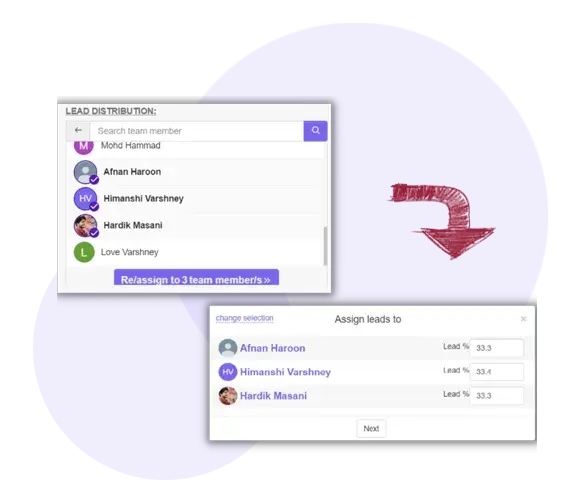
Tracking apps help teams stay organised with structured task management. Managers can assign tasks, track their completion and ensure that every sales activity is aligned with the larger sales pipeline.
Missed follow-ups are one of the biggest reasons deals fall through. telecrm sends timely notifications for follow-ups, ensuring that the sales representatives stay consistent with prospect engagement and never miss an opportunity.
With telecrm’s centralised dashboard, businesses can track the number of calls per person, total sales calls, activity performance and revenue generated by each sales representative. This level of transparency helps managers identify top performers, optimise processes and guide teams toward better results.
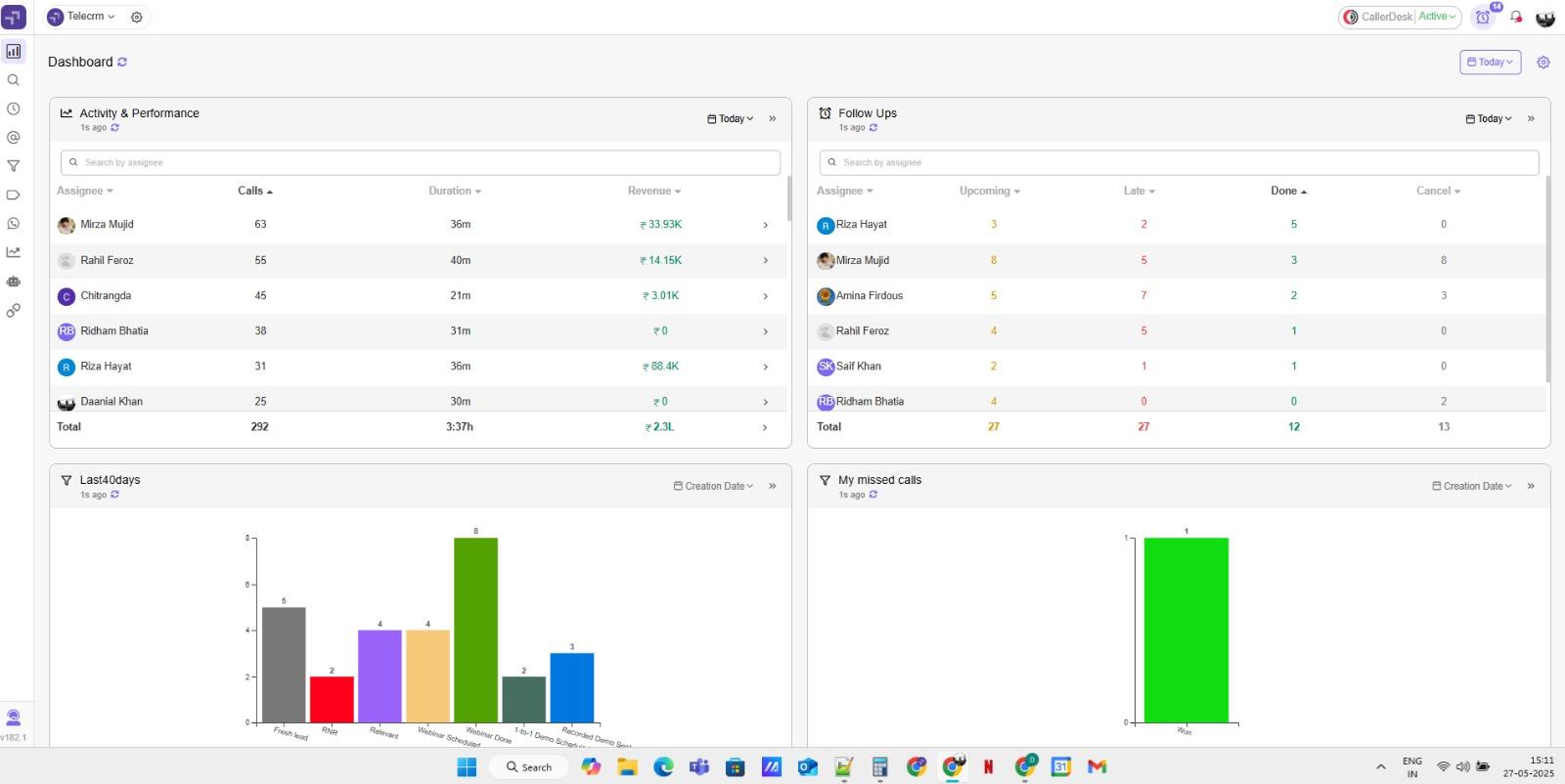
Over time, the insights generated through a sales reporting app like telecrm help refine your processes and reduce inefficiencies. This allows your business to grow without adding unnecessary operational complexity.
Choosing the right salesman tracking app goes beyond checking off a list of set features. The focus should be on tools that genuinely support your sales processes, provide clarity and scale with your business as it grows. Here are some key features you must look out for when evaluating a sales employee tracking app.
A good tracking app should offer real-time visibility into sales activities. This includes tracking daily tasks, client visits and movement in the field, helping managers stay informed without relying on constant manual updates.
Accurate attendance tracking, including check-ins and check-outs, helps establish clear work patterns. This is especially important for field sales teams, where visibility into working hours and on-ground presence is essential.
Related Read: 11 CRM Tools for Sales Teams in 2026: Features and Pricing
The ability to execute effective task management strategies including assigning, tracking and monitoring tasks and customer visits ensures that sales activities are well-organised. It also helps managers follow up on progress and identify delays before they affect outcomes.
A sales employee tracking app should consolidate all sales data into a single dashboard. Clear, easy-to-read reports make it easier to track performance, identify trends and make informed decisions without digging through multiple systems.
Consistent data collection across teams is critical. The right app should standardise how activities are logged, ensuring reliable insights that can be used for performance reviews, forecasting and planning.
Since most sales teams operate on the move, the app should be easy to use on mobile devices. A simple, intuitive interface ensures better adoption and accurate data entry by sales representatives.
Related read: How to Close a Sale: 30 Proven Sales Closing Techniques to Win More Deals
As your business grows, the tracking app should be able to scale with your team size and operational complexity. Integration with existing tools such as CRM or reporting systems can further improve efficiency and reduce manual effort.
For instance, platforms like telecrm integrate seamlessly with sales tracking apps, ensuring that field activity, lead management, follow-ups and reporting remain connected within one unified system. This reduces data silos, eliminates duplicate entries and enables smoother coordination between your sales and management teams.
Sales employee tracking apps are not limited to a single industry. Any business that relies on on-ground sales activity, distributed teams or relationship-driven selling can benefit from better visibility and structured tracking. These tools help companies monitor field activities, manage leads, track performance and improve conversion rates through data-backed decisions.
Across industries, many companies rely on popular CRM and sales tracking tools such as Salesforce CRM, HubSpot Sales Hub, Zoho CRM, Pipedrive and LeadSquared to manage their sales pipelines and track activities.
However, for businesses that rely heavily on calling, follow-ups and fast lead responses, telecrm provides a simpler and more focused solution that combines sales tracking, automation and employee performance monitoring in one platform.
Below are some common use cases across industries.
In FMCG and retail, sales teams are often responsible for multiple outlets, frequent visits and strict coverage plans. Sales employee tracking apps help managers track outlet visits, monitor route adherence and ensure that sales representatives are covering their assigned territories efficiently. This improves execution consistency and helps prevent missed or duplicate visits.
Real estate sales involve site visits, follow-ups and coordination across multiple properties. Tracking apps provide visibility into site visits, client interactions and follow-up timelines, helping managers understand sales activity beyond just closed deals. This ensures better lead management and more structured follow-through.
Pharma sales teams typically work across assigned doctor or hospital territories and follow defined visit cycles. Sales employee tracking apps help track visit frequency, ensure compliance with schedules and provide clarity on daily activity levels. This supports better territory planning and consistent engagement.
Insurance sales depend heavily on meetings, follow-ups and long-term relationship building. Tracking apps help monitor appointments, task completion and follow-up cycles, ensuring that leads are nurtured consistently and opportunities are not lost due to missed touchpoints.
For service-oriented businesses, sales teams often balance client meetings with coordination across internal teams. Sales employee tracking apps help track client visits, service discussions and task progress, offering better visibility into how sales efforts translate into service delivery, customer satisfaction and revenue outcomes.
With several sales employee tracking apps available in the market, choosing the right one can feel overwhelming. The key is to focus on what your sales team actually needs today, while ensuring the solution can support your business as it grows.
To start with, you must first evaluate how your sales team currently operates. Consider whether your team is field-based, remote or a mix of both and identify the challenges you face in tracking activities, performance or follow-ups. A clear understanding of your sales process will help you choose an app that fits seamlessly into existing workflows.
A tracking app only delivers results when your sales team actually uses it every day. If the interface is complicated or time-consuming, adoption will drop and data quality will suffer.
Choose a solution with a clean, intuitive design that requires minimal training and allows sales representatives to update activities, log visits and track tasks quickly, even while on the move. The simpler the system is to use, the more consistently it will be adopted, leading to more accurate data and more reliable insights for decision-making.
Tracking activities alone is not enough. The app should help you understand what the data actually means and what actions to take next.
Choose a platform that provides clear, easy-to-read reports and dashboards that highlight performance trends, missed follow-ups, productivity gaps and conversion opportunities. You should be able to spot issues and make informed decisions quickly, without spending hours analysing raw data. The goal is not just visibility, but clarity that drives smarter action.
Sales data directly influences revenue forecasts, performance reviews and strategic decisions within your company. If the data is incomplete or inconsistent, your decisions will be flawed.
Choose a tracking app that standardises how information is entered, ensuring uniform reporting across the team. At the same time, it should have strong security measures in place such as controlled access, data encryption and secure storage to protect sensitive business and customer information. Also, it should inform employees about what is tracked, why it is tracked, and when tracking is active. Use tracking for approved work hours and sales activities, and choose apps with role-based access, encryption and secure storage.
As your team grows or expands into new regions, your tracking app should scale with you. Look for solutions that can handle increasing team sizes, changing sales structures and evolving business needs without requiring frequent changes or upgrades.
A sales employee tracking app should not operate in isolation. It needs to connect smoothly with the systems you already use, such as your CRM, reporting tools or communication platforms.
Strong integration reduces manual data entry, prevents duplication and ensures information flows automatically between systems. This creates a single, connected sales ecosystem where activity tracking, lead management and reporting stay aligned, saving time and improving overall efficiency.
Before finalising a tracking app, assess how dependable the provider is. Even the best features lose value if the platform frequently faces downtime or technical issues.
Look for a provider that offers responsive customer support, timely issue resolution and regular product updates. A stable, well-maintained platform ensures smooth day-to-day operations and long-term reliability.
Sales performance can no longer rely on scattered updates, manual reports or delayed visibility. In a business environment where speed, accuracy and accountability directly impact revenue, structured tracking has become essential rather than optional for your company.
The best sales tracking apps bring clarity to your sales operations. They replace guesswork with real-time insights, standardise data across teams and help managers move from reactive supervision to proactive decision-making. More importantly, they give your sales reps the structure they need to stay focused on what truly matters.
If you make a thoughtful decision, the right tracking app does more than monitor the activity of your sales team. It strengthens forecasting, improves performance reviews, streamlines onboarding and ensures alignment between strategy and on-ground execution. Over time, this creates a more efficient, transparent and growth-driven sales function.
Ultimately, everything you need to know about sales employee tracking apps comes down to the fact that they are not just tools for oversight, but enablers of smarter, scalable and sustainable business growth.
Book a demo now to see how employee tracking can be made easy with sales management software like telecrm
Related Read: How to Build & Optimise a Sales Pipeline with CRM for Business Growth
It tracks sales activities such as attendance, calls, client visits, tasks, follow-ups, routes and performance metrics.
It is useful for field sales, remote sales and distributed sales teams that need real-time visibility into daily work.
It reduces manual reporting, standardises data and gives managers real-time dashboards instead of delayed updates.
telecrm helps managers track calls, follow-ups, tasks, attendance and team performance from one dashboard.

© Copyright 2026 telecrm.in (Flamon Cloudtech Pvt Ltd) - All Rights Reserved • Privacy Policy • T&C



© Copyright 2026 telecrm.in - All Rights Reserved • Privacy Policy • T&C