

Starting a real estate business in India usually begins with one clear niche, one local market and a simple lead-generation plan. In most cases, the easiest starting point is brokerage, consulting or property management because these models need less capital than launching your own project.
The practical path is simple: understand your market, choose a niche, set up the business properly, find your first clients and then use tools to manage follow-ups consistently. This guide walks you through each step without overcomplicating it.
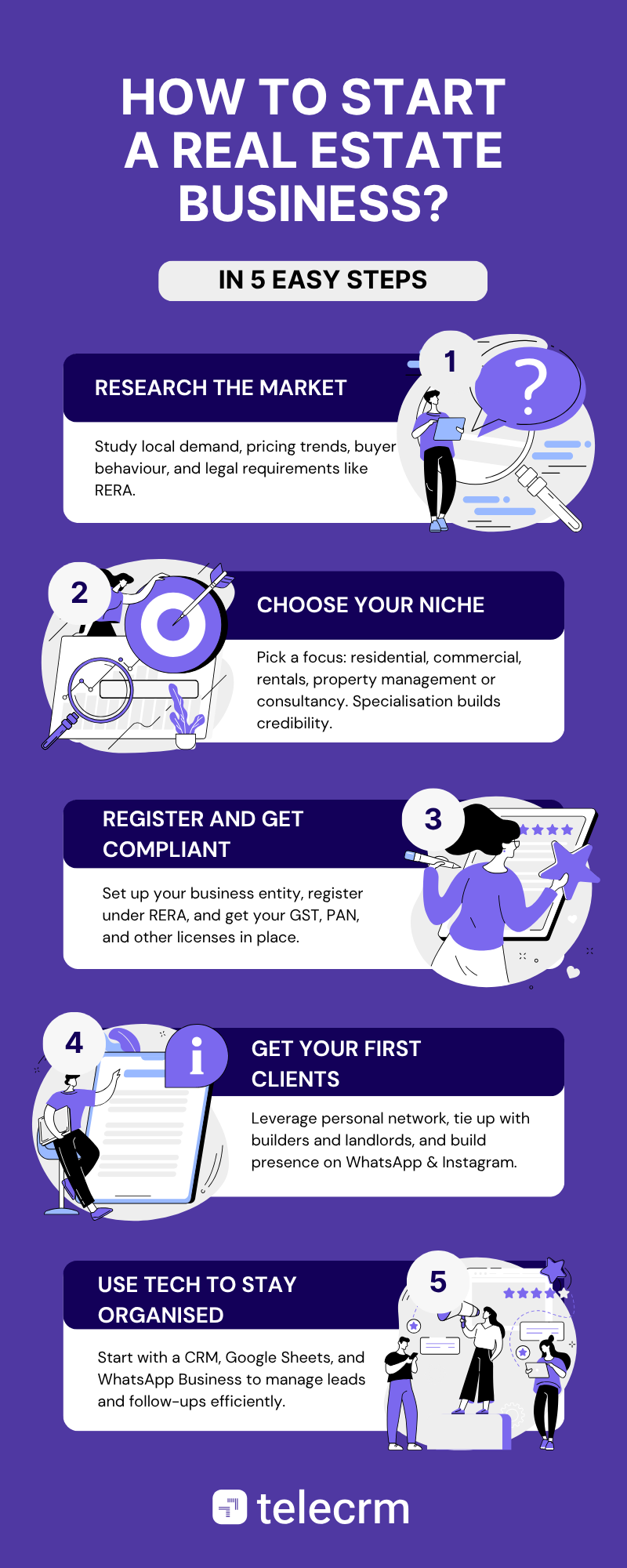
We have broken down the process of starting a real estate business into 5 simple and easy-to-follow steps. Follow these steps and start your real estate business in India in 2026!
Related opportunity: As you grow your network, you may meet sales teams that need a better way to manage calls and follow-ups. Through telecrm’s business referral program, you can refer these businesses and earn recurring commissions.
Real estate rewards clarity more than guesswork. Before you spend money or start pitching properties, understand what is moving in your market, who is buying and where demand is growing.
Look around. Are people buying plots? Flats? Commercial spaces? Is there new construction happening? What are the popular areas and which ones are up-and-coming? A walk around your city with open eyes can reveal a lot.
Are you planning to work with first-time homebuyers, NRIs looking for investments, or maybe small businesses that want to rent office space? Each target group has different needs, budgets and ways of buying. Figure that out early.
Check what other agents or developers are doing — how they advertise, what projects they take on, what kind of customers they attract. Don’t just copy them, but understand what’s working and where you can do better.
One of the biggest mistakes new real estate entrepreneurs make is trying to sell everything to everyone. Flats, plots, rentals, commercial deals and luxury inventory all at once usually leads to weak positioning.
The result? Confused messaging, scattered efforts and zero credibility.
Instead, start with one clear focus. A niche makes your messaging sharper, helps people remember what you do and makes referrals easier.

Here are a few popular niches in India where you can own real estate business:
This is the most common and accessible starting point. As a broker, you act as the middleman between buyers and sellers or landlords and tenants. Your role is to connect the right people, manage site visits, negotiate deals and close transactions.
It’s fast-paced, low-investment and if you build a solid network, you can start earning commissions quickly.
This includes helping people buy or sell homes, flats, villas, plots, or builder floors. The market is huge, but so is the competition. What helps you win? Focusing on specific buyer segments (like first-time buyers or NRIs) or areas (like Noida Sector 150 or Baner in Pune).
This involves leasing or selling commercial properties like offices, shops, warehouses or coworking areas. B2B clients usually mean bigger deals, but also longer cycles and more paperwork.
Landlords who live in other cities often need someone to manage rent collection, maintenance and tenant issues. It’s recurring revenue and a growing market, especially in metros.
If you’re good with numbers and strategy, you can consult builders on pricing, go-to-market plans, or even manage the digital marketing for their project launches.
Okay, so you’ve picked your niche. Now let’s talk structure—because no matter how small you start, this is still a business. And if you want to scale, make profits, or even get builder tie-ups in the future, you need to have your backend sorted.
If you are starting solo, a sole proprietorship can be the easiest way to begin. If you plan to work with partners or want a cleaner long-term structure, consider a partnership, LLP or private limited company. You can even start as a real estate agent to first understand the ins and outs of the real estate business.
Each option has its own pros and cons in terms of taxes, liability and compliance.
No, you don’t need a 40-slide deck. But you do need answers to basic questions like:
Even a 1-page Notion doc or Excel sheet works. Just make sure your plan is real, not just in your head.

Let’s be real, just registering your real estate business doesn’t mean people will magically find you. Real estate market is a relationship-driven industry. You win clients when people trust you. And trust takes time, consistency and some smart moves.
Here’s how to get started:
Your first few deals will usually come from people you already know: friends, family, old colleagues, local business owners and existing property contacts.
Reach out with a simple message explaining what kind of properties or services you now handle. Keep it direct, personal and easy to forward.
Even if they’re not buying right now, they might know someone who is.
If your niche is residential, your buyers are likely on Instagram, YouTube and WhatsApp. If you work in commercial leasing, LinkedIn and local business networks will matter more.
So it’s important to use the right real estate marketing tools and to build your presence on the right platforms:

Pro Tip: In 2026, getting people’s attention in the most unique ways can get you clients without spending a hefty sum on advertisements. And that is exactly what you should focus on. Build awarenes through quirky and relatable adverts. Here are some creative real estate ad examples for you to take reference from.
Builders often need brokers to move their inventory faster. Same with landlords who have vacant flats or shops. Approach them with a clear pitch: what areas you cover, what kind of clients you can bring and how quickly you can close.
Once you’ve closed your first few deals and got some cash flow going, it’s time to shift gears. This is where most people get stuck: they’re doing everything themselves, working 14 hours a day, but not really growing.
Scaling doesn’t mean renting a fancy office or hiring a big team overnight. It means setting up systems so your business can grow without burning you out.
Once you’ve hit some consistency, start with one lean hire, usually someone who can help with site visits, lead coordination or follow-ups. That gives you more time to focus on builder relationships, negotiations and growth.
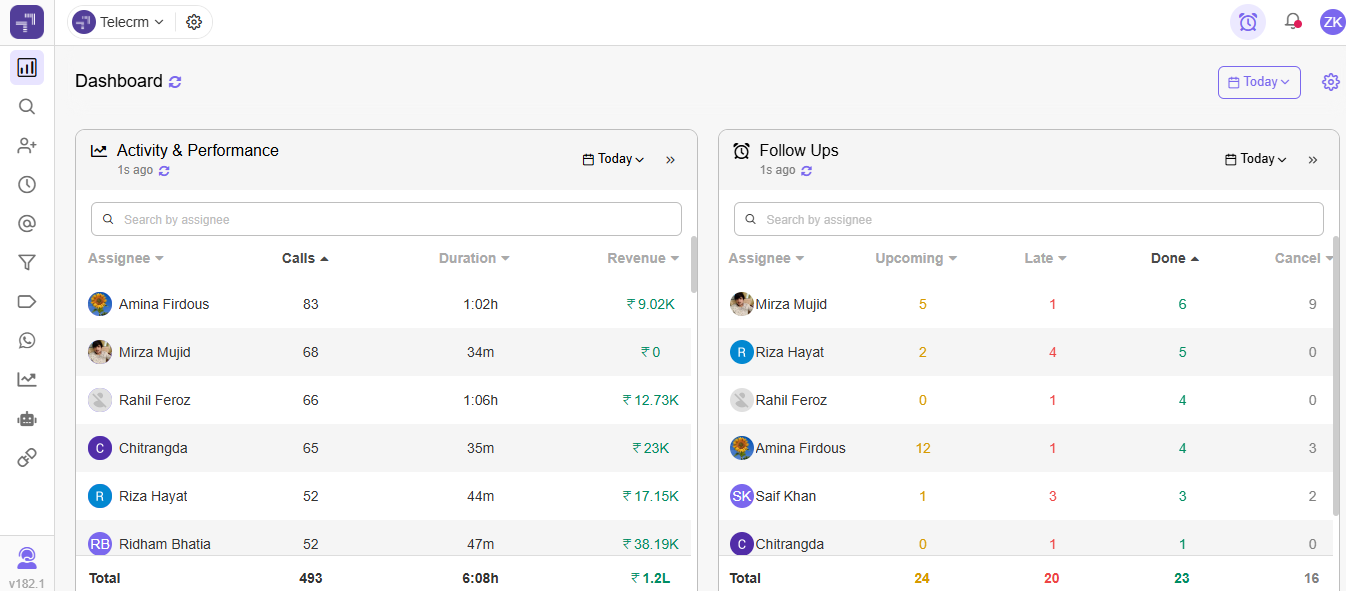
As enquiries start increasing, move your lead management into a real estate CRM like telecrm. That helps you capture enquiries in one place, assign follow-ups, track call history, plan site visits and reduce the chances of hot leads going cold.
Which channel brings the most leads? Which area gives you the best margins? Where are you losing deals?
Use simple dashboards or tools to track this; data-driven growth is real, even in real estate.
Related Read: 9 Best Real Estate CRM in 2026 and Beyond!
Starting a real estate business in India is less about having a huge budget and more about picking the right niche, understanding one market well and following up consistently.
If you keep the model simple in the beginning, build trust locally and stay disciplined with your process, you can grow faster than someone trying to do everything at once.
And once leads start increasing, tools like telecrm can help you keep enquiries, calls, site visits and follow-ups organised without making the business feel chaotic.
If you are acting as a real estate agent for projects covered under RERA, you generally need to register with the respective State RERA. Apart from that, keep your business structure, PAN, invoicing and other compliance basics in order before you begin. Exact requirements can vary by state, so check the local authority before you start closing deals.
The main categories in real estate are
You can absolutely start with minimal investment. Begin by working as a freelance real estate agent or property consultant and even work under real estate professionals. Use free tools like WhatsApp and Google Sheets to manage your leads. Focus on building relationships and tying up with builders or landlords. You bring the clients, they provide the inventory and you earn commission on every deal.
Yes, but only if you treat it like a serious business. Real estate sector margins can be high, especially in resale, commercial and high-value residential deals. But consistency, networking, and trust are key. Most agents don’t fail because of a lack of opportunity; they fail because of a lack of process and follow-up.
That depends on the model you choose. If you start solo as a broker or consultant, your main costs are usually registrations, local travel, phone, basic marketing and follow-up tools. Your budget goes up only when you add office rent, team salaries or paid lead-generation campaigns. The smartest way to start is lean, then increase spending once deals start closing consistently.



© Copyright 2026 telecrm.in (Flamon Cloudtech Pvt Ltd) - All Rights Reserved • Privacy Policy • T&C



© Copyright 2026 telecrm.in - All Rights Reserved • Privacy Policy • T&C