

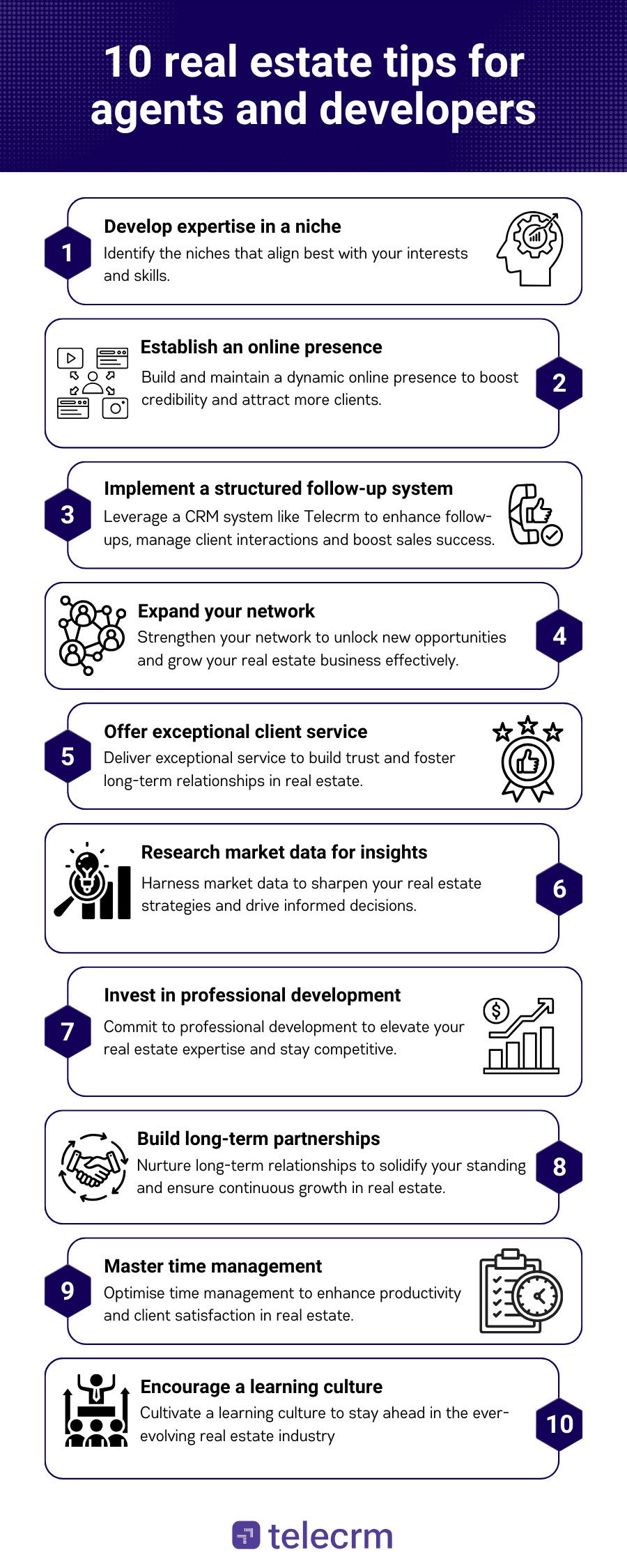
The best real estate tips for agents and developers are to specialise in a niche, build a strong online presence, follow up consistently, expand your network, offer excellent client service, use market data, keep learning, build long-term relationships, manage time well, and create a learning culture within your team.
Success in real estate is not just about matching your customers with the right properties, there’s a lot more to it. You have to keep in mind multiple factors like budget, preferences, locality, property type, etc. And then implement the best strategies to make the whole process so smooth and seamless that the customer not only buys from you but also becomes an advocate for your business.
However, with all the digitisation, AI integrations and automation tools, the real estate industry has become quite cluttered and hasty. Your agents and managers have to be on top of their game to ensure the lead they are assigned converts into a paying customer. In order to make their job easier, let’s explore 10 effective real estate tips that are often overlooked but can boost your business’s growth and success significantly.
These real estate tips are designed for both agents and developers. Agents can use them to improve lead conversion and client relationships, while developers can use them to plan projects, manage stakeholders, and improve sales outcomes.
This particular tip is specifically for agents with considerable experience. You need to start focusing on a niche, such as:
Luxury homes
Properties for first-time buyers
Commercial real estate
This helps you in becoming the go-to person for that specific domain. This means you’ll know the ins and outs of your niche, from the best locations to the latest trends and market rates, to better cater to your lead’s preferences.
For example, if you focus on luxury homes, you’ll learn about high-end amenities, understand the needs of affluent buyers and get familiar with the best neighbourhoods. When you’re seen as an expert in this field, clients looking for luxury properties will seek you out and you’ll build a reputation for being knowledgeable and reliable.

To define your niche, you need to figure out things like:
How much capital would you need for the project you want to start with?
Would you need investors or are you planning to bootstrap the project?
Do you have the expertise to see the project to its end?
Pin down who your ideal customers are in a specific part of your industry
After answering these questions, you have multiple options to choose from for your project whether:
Small apartment complexes
High-end residential buildings
Luxury villas and bungalows
Commercial buildings or shopping complexes
Government buildings
Defining a niche helps you focus all your resources, efforts and skills on a project that you specialise in and fill the market gap.
For instance, if you focus on affordable housing, you’ll understand what budget-conscious buyers are looking for and how to maximise the value they’re getting out of the purchase while keeping costs down. This targeted approach helps you attract a loyal customer base while positioning your business as a leader in that niche.
A strong online presence helps real estate agents build trust and attract more qualified leads. Start by creating:
You need to make sure that your profile is professional, visible and consistent all across social media platforms so that your leads and customers can visit them and check out the latest updates about your ongoing and upcoming projects.
What will this do you may ask? This will help you establish two things: credibility and trust because without them you cannot make any big bet sales.
Don’t forget to encourage satisfied clients to leave reviews and testimonials. Positive feedback will help in building trust with new clients and enhance your reputation. A well-managed online presence can help you connect with more people and build a solid client base.

Establishing an engaging digital presence is a must for any developer. For that, you need to:
Create a website that defines what your business offers and is simple and easily navigable
Include high-quality pictures of your past or upcoming projects on the site
Make it easy for visitors to find what they’re looking for and get in touch with you.
Social media is the next most important aspect for you when establishing your digital presence. Use platforms like LinkedIn, Instagram and Facebook to share updates on your projects, post behind-the-scenes snippets of your construction process and highlight the unique features of your properties. Why you may ask? Well, engaging content helps capture the interest of potential buyers and keeps your projects top-of-mind.
You can also consider online advertising if you have the budget. Creative real estate ads and targeted campaigns can help you reach buyers who are actively searching for properties similar to what you offer. A strong digital presence can drive interest in your projects and help you stand out in a competitive real estate marketing landscape.
Pro tip: To establish a strong online presence across all social media platforms, check out the 7 best real estate marketing tools blog to know which tool can help maximise your marketing efforts.
In order to close more sales, you must track leads and follow up with potential clients without any exceptions. You can set up reminders for follow-ups and schedule regular check-ins with leads who haven’t yet made a decision. To simplify this process, start using real estate broker software that can manage leads, schedule follow-ups, and automate communication. Send personalised follow-up messages via WhatsApp to show that you remember their specific needs and preferences. For instance, if a client is interested in properties with a home office, mention new listings that match this criterion.
To manage these tasks better, use a real estate CRM like telecrm to organise client interactions, track conversations, assign leads, schedule follow-ups, and see what was discussed with each prospect.
Being consistent with your follow-ups shows clients that you’re attentive and committed. It also keeps you on their radar, making it more likely that they’ll turn to you when they’re ready to make a move.

As a developer, you must be looking into managing relationships with real estate agents, investors and potential buyers. Use a CRM system to keep track of your contacts, monitor interactions and follow up with them in a timely manner.
Set up a structured follow-up plan to keep contacts engaged. For example, after a property launch event, send personalised thank-you messages or updates about booking timelines. If you have spoken with potential investors, follow up with detailed proposals or updates on new opportunities.
A well-organised follow-up system ensures that you stay connected with key stakeholders and keep them informed about your projects. This way you can build trust and increase the chances of successful partnerships and sales.
Expanding your network is essential to your growth as an agent. Start by connecting with other industry professionals, such as home loan brokers, real estate lawyers and property inspection service companies. These connections can be valuable when you need referrals or expert advice for your clients.
Make it a point to attend industry events and local networking meetings. These are great opportunities to meet new people, share your expertise and learn about the latest trends. Don’t forget to Introduce yourself and engage in conversations with people who could become valuable contacts.
Maintaining relationships with past clients is equally important. They can refer you to friends and family or return for future business. Networking is about making connections and keeping those relationships strong over time. This way you’ll create a support system that can help drive your business forward and open doors to new opportunities.

This is the most crucial aspect of growing your business as well. Begin by building relationships with real estate agents who can help market and sell your properties (even if you have an in-house sales team). Strong connections with these professionals can lead to more successful sales and valuable market insights.
Engage with local business communities and industry groups. Join real estate associations, attend property expos and participate in local business events. These connections can lead to collaborations, partnerships and innovative project ideas.
Develop relationships with contractors, architects and planners, so that when you start your next project you already have a team in place to begin with. A reliable network of professionals can streamline your project management and contribute to successful developments. By actively expanding and nurturing your network, you’ll not only create valuable connections that can support and grow your business but also gain access to end-to-end real estate services.
Another important tip to keep in mind is you need to provide outstanding services to your clients if you are looking to build a successful career in real estate. Start by being attentive and responsive to your clients’ needs. Listen carefully to their requirements and preferences and make sure to address their concerns promptly.
Keep communication clear and consistent. Update your clients regularly about property views, negotiations and the buying or selling process. Being transparent and keeping them informed always helps in building trust and reduces any doubts they might have.
Going the extra mile can have a strong positive impact. Whether you provide detailed property information, useful local insights, or support with paperwork, this level of service helps clients feel more confident and valued.
Encourage feedback from happy customers and use it to improve your service. Positive experiences can lead to referrals and repeat business, while continual improvement ensures you stay far ahead of your competition.

Offering exceptional client service is equally important for developers. Start by ensuring clear and open communication throughout the development process. Keep your clients informed about project progress, address any issues promptly and be transparent about timelines and costs.
Make sure your clients have a positive experience from start to finish. Provide detailed information about your projects, offer virtual tours or site visits and assist with any queries they may have. Going above and beyond, such as providing after-sales support or helping with any post-purchase concerns, can significantly enhance client satisfaction.
Feedback is equally important so be sure to encourage your clients to provide feedback and use it to refine your processes and offerings. A strong commitment to excellent service will build your reputation, attract more clients and foster long-lasting relationships.
Pro tip: Follow a structured real estate lead management process to keep customer conversations and next steps organised.
For this real estate tip, research and understand your local market thoroughly. Review market reports, property prices, demand patterns, and buyer preferences regularly so you can give clients accurate advice and stay ahead of competitors.
Use market data to identify emerging trends and opportunities. For example, if you notice a rise in demand for properties in a particular neighbourhood, you can focus your efforts on that area and offer clients valuable insights.
Share relevant market information with your clients to help them make informed decisions. By demonstrating your expertise and understanding of the market, you build trust and position yourself as a knowledgeable professional.

Market data is also essential for developers. You or your team must conduct thorough research to understand buyer preferences, trends and property values. This information helps you make informed decisions about project design, location and pricing.
Analyse market trends to identify areas with high growth potential or emerging demands. For example, if there is increasing interest in eco-friendly buildings or a particular type of apartment, you can incorporate these demands into your next developments to attract buyers.
Use market data to guide your real estate marketing ideas, strategies and project planning. By aligning your developments with current market demands, you increase the likelihood of successful sales and project success.
Investing in your professional growth is crucial for staying ahead in real estate business. Take advantage of training programmes and workshops to enhance your skills and knowledge. This could include courses on negotiation techniques, marketing strategies or the latest real estate technology.
Seek out certifications or qualifications that can add credibility to your profile. Specialising in areas like property management or real estate finance can set you apart from the competition and open up new opportunities.
Networking with other professionals and joining industry associations can also provide valuable insights and keep you updated on best practices. Continuous learning and development not only improve your skills but also help you adapt to changes in the industry and provide better service to your clients.

As a developer, investing in professional development can lead to better project outcomes and business growth. Consider attending industry conferences, workshops or training sessions to stay informed about the latest construction techniques, design trends and regulatory changes.
Pursuing advanced certifications or specialisations, such as in sustainable development or project management, can enhance your expertise and reputation.
Building relationships with other industry professionals and joining relevant associations can offer valuable networking opportunities and insights. When you continuously improve your skills and knowledge, you ensure that your projects remain competitive and meet the evolving demands of the market.
Creating lasting relationships with your clients is key to long-term success. Start by getting to know your clients beyond just their current needs. Understand their future plans and how you can help them achieve their goals.
Stay in touch even after a deal is done. Reach out with useful information like market updates or new property listings that might interest them. Regular check-ins show you care and such acts of kindness keep you on their radar.
Offer help beyond buying or selling a property. For example, recommend trusted movers, home improvement services, or home improvement loans that can make renovations more affordable. When you go out of your way and put in the extra effort, you are building a much stronger connection and increasing your chances for future business or referral.

As a developer, your main focus should be on building strong and long-lasting relationships. Begin by understanding what your clients or investors want in the long run.
Keep in touch with them regularly. Share updates about your projects or new opportunities that might be of interest. Staying in contact helps you stay top-of-mind and shows that you value their business.
Think about offering special deals or previews of new projects to loyal clients. Small gestures like these can strengthen your client relationships and encourage them to keep working with you.
When you focus on building a partnership with your customers, you are creating a network of clients and contacts that will help support and grow your business over time.
Efficient time management is crucial for maximising productivity and ensuring client satisfaction. Start by organising your day with clear priorities and blocks of time dedicated to specific tasks such as client meetings, property visits and administrative work.
Adopt tools and apps designed to help manage time effectively, such as calendar apps that synchronise across all your devices or task management apps that allow you to keep track of daily responsibilities and deadlines.
Teach yourself to delegate tasks when possible. If you work within a team or agency, leverage the strengths of other team members to handle certain aspects of the business, so that you can focus on direct sales and client interactions.

Time management is just as critical for developers especially when handling multiple projects. Utilise property management software to keep track of project timelines, deadlines and deliverables. This can help ensure that everything stays on schedule and that resources are allocated efficiently.
Establish regular stand-up meetings with your team and external stakeholders to update everyone on developments and address any issues that might cause delays. Clear and consistent communication can prevent any deadline-related issue from becoming a critical problem.
In an industry that’s constantly evolving, inculcating a culture of learning within your team or agency can be a significant competitive advantage. Encourage participation in skill development programs, workshops and seminars. This not only enhances individual skills but also brings new ideas and techniques into your agency.
Create a resource library of learning materials related to real estate trends, sales strategies and market analysis. Make it easily accessible to all team members to encourage self-directed learning and improvement.
Celebrate the implementation of new skills or knowledge. When agents use what they’ve learned to close deals or improve client relationships, highlight those wins in team meetings to motivate others.

Cultivating a learning culture involves keeping your team updated with the latest construction technologies, architectural trends and compliance regulations. This can lead to innovations that save time, reduce costs or enhance the appeal of your projects.
Invest in training programs that can bring new skills into your team, such as green building techniques or advanced project management tools. This keeps your staff engaged and at the forefront of industry developments.
Encourage collaboration and knowledge sharing among team members. Often, the best learning comes from within the team, as different members may possess specialised knowledge or share unique experiences that can benefit their peers.
The real estate industry can be competitive, but the right habits, systems, and tools can make growth easier. Whether you are an agent improving sales or a developer managing multiple projects, these tips can help you build trust, follow up better, manage clients, and close more deals.
Book a demo with telecrm to see how it can help you manage real estate leads, calls, follow-ups, and customer relationships in one place.
The best real estate tips for agents are to specialise in a niche, build an online presence, follow up consistently, expand their network, offer excellent client service, study local market data, manage time well, and build long-term client relationships.
The best real estate tips for developers are to define a niche, build a strong digital presence, maintain relationships with agents and investors, study buyer demand, manage project timelines, offer transparent communication, and build long-term partnerships.
Follow-up is important because real estate decisions usually take time. Consistent follow-ups help agents stay visible, answer questions, share relevant listings, and move interested prospects closer to a decision.
CRM software helps real estate teams capture leads, track calls, schedule follow-ups, manage WhatsApp conversations, record client preferences, and monitor sales activity. A CRM like telecrm can help agents and developers manage customer relationships more systematically.



© Copyright 2026 telecrm.in (Flamon Cloudtech Pvt Ltd) - All Rights Reserved • Privacy Policy • T&C



© Copyright 2026 telecrm.in - All Rights Reserved • Privacy Policy • T&C