

You might have the best product or service and top-notch teams across departments, but if you can’t connect with and understand your customers’ needs, you’ll struggle to tout your goods in the B2C marketplace.
So, the real question isn’t about the challenges — it’s about how you can overcome them. The answer? Implementing a B2C CRM system in your organisation.
B2C CRM is customer relationship management software built for selling to individual consumers, not businesses. It captures leads, segments customers and automates follow-ups across calls, WhatsApp, email and ads. It matters in B2C because teams handle high lead volumes and buyers expect fast, personal replies. For Indian sellers in real estate, education and eCommerce, it keeps every enquiry tracked and followed up.
This guide covers:
B2C CRM is customer relationship management software for businesses that sell to individual consumers. It collects customer data from every interaction, purchase and message, then turns it into insights that guide marketing and service.
Here’s how a B2C CRM enhances your business operations:
Using a B2C CRM on autopilot will not deliver results on its own. You need to use its crm features well to connect with customers and grow your reach. Here is how to make the most of it:
Not every customer is the same. And if you treat them like they are, your messages will start feeling off — too generic, too boring or just not relevant.
Some people are students looking for deals. Others are working professionals with specific needs. Some shop regularly, some haven’t returned in months. So why send them all the same offer?
With a B2C CRM, you can group your audience based on things like:
These groups are called segments, and they help you send more meaningful messages. Instead of one-size-fits-all, you speak directly to what each group actually cares about.
When your message feels relevant, people are more likely to open, click and respond. And the more you do this, the more trust you build over time.
Best part? You don’t have to do this manually.
With telecrm’s Filter feature, you can instantly sort and target leads by location, interest or activity.
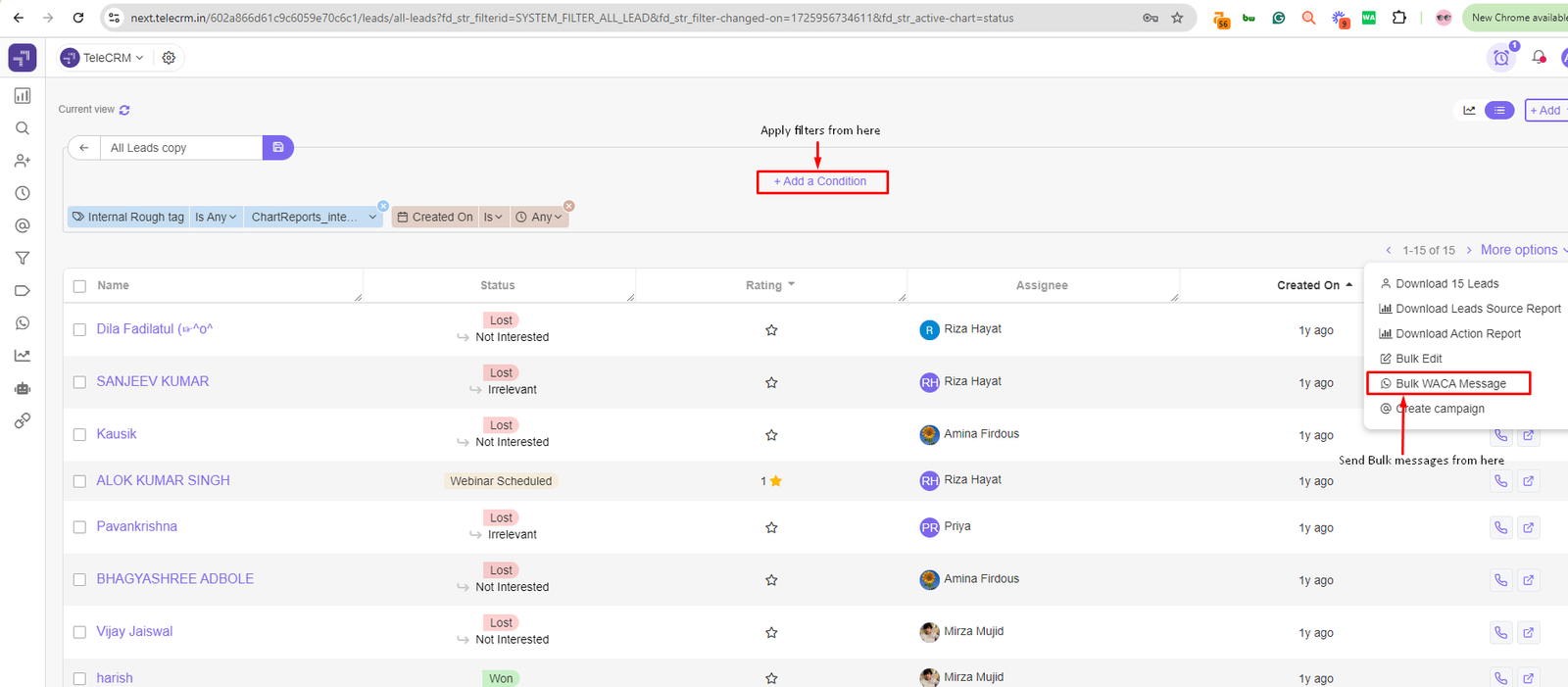
That means no guesswork and no sending the same boring message to everyone. Smart targeting makes you look sharp. And it helps your customers feel like you’re actually paying attention.
Have you ever received a message that felt like it was meant just for you? Maybe it mentioned something you recently searched for or offered a discount on something you were planning to buy. It probably made you pause and pay attention.
That’s the kind of connection you can create when you personalise your messages using a B2C CRM.
Your CRM process shows you exactly what each customer is interested in. You can see what they’ve bought, which pages they spent time on and even what they’ve asked your team. This helps you send messages that feel relevant and timely.
Let’s say: If someone regularly buys self-help books, and you have a new release coming in, you can send a quick note like:
“Hey, we just added some great new self-help reads. Want to take a look?”
It’s short, simple and shows that you’re paying attention.
When customers feel seen, they’re more likely to stay with your brand, buy again or even recommend you to others. That’s how strong customer relationships are built.
With telecrm’s WhatsApp CRM, this becomes easy. You can:
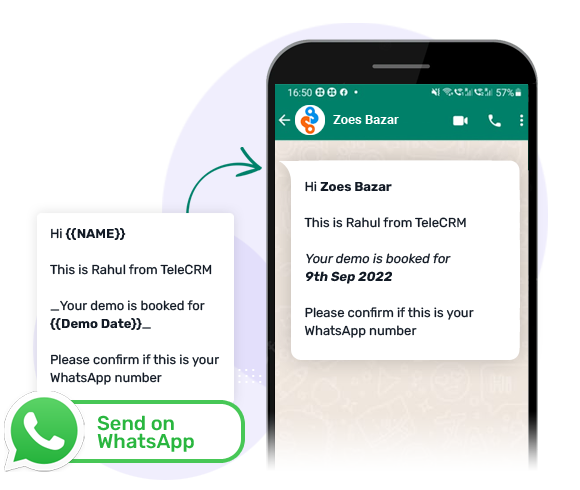
You’re not just selling. You’re having better conversations that lead to better results.
Following up with every customer can get overwhelming. Even if you have a big team, it’s easy to miss messages, forget to reply or delay an important call. And in B2C sales processes, those small delays can cost you deals.
This is where CRM automation helps.
Your B2C CRM can take care of the routine stuff so your team doesn’t have to. It can:
You stay in touch without having to do it all manually.
And it’s not just about saving time. Small, thoughtful actions like sending a birthday wish or a discount at the right moment can make a customer feel seen and appreciated. These are the touches that turn one-time buyers into loyal customers.
Once your automation is set up, you’re less likely to miss out on deals or forget follow-ups. It also frees you up to focus on the things that actually need your attention.
With telecrm, setting up automation is quick and easy. In fact, it takes less time than setting up a social media profile. You can automate everything from messages to task reminders and make sure no lead ever falls through the cracks.
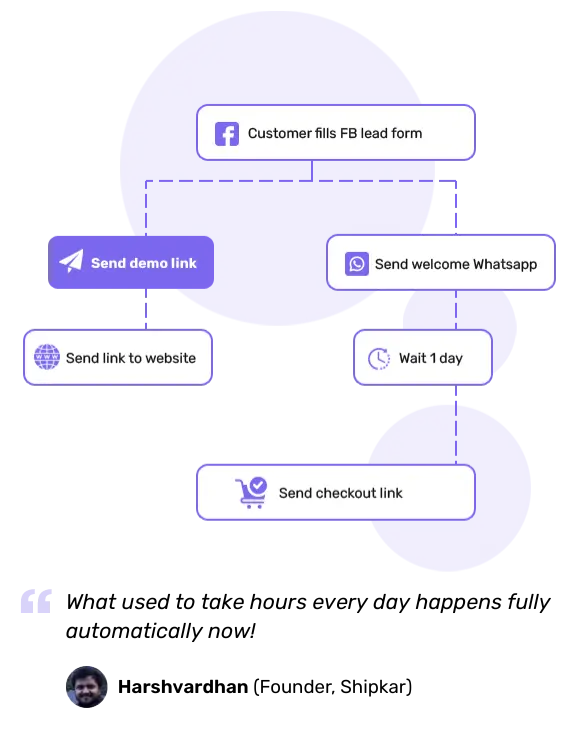
Automation isn’t about doing less. It’s about doing the right things at the right time, without any manual effort.
Every time a customer calls, chats, makes a purchase or even just browses your website, they’re telling you something. Maybe not with words, but through their actions. The question is — are you listening?
A B2C CRM helps you keep track of all these small signals. It collects your customer data in one place and shows you what your customers are doing, what they care about and how they behave when shopping.
For instance:
This kind of simple observation can make a big difference. You stop guessing and start acting based on what your customer interactions are actually telling you.
And it’s not just about tracking—it’s about understanding. When your team can see patterns in how people shop or respond, they can adjust your sales process, improve your marketing efforts and time things better.
With telecrm, you also get clear, easy-to-understand reports. These help you spot trends and track critical marketing metrics without digging through spreadsheets. It becomes easier to see what’s working and where you need to improve.
When customers feel like you understand them, they’re more likely to trust you, buy from you again and even recommend you to others.

Your customers don’t just talk to you in one place. One day they might see your ad on Instagram, the next day they reply to a WhatsApp message or speak to one of your sales reps over the phone.
If these conversations aren’t connected, things start to fall through the cracks. A customer might repeat themselves, get confused or feel like no one really knows what’s going on.
A good B2C CRM system fixes this.
It brings all your customer interactions — from calls and chats to emails and sign-ups—into one place. So no matter where the customer reaches out, your team always has the full picture.
This kind of setup keeps the experience smooth for your customers and easy for your team.
With telecrm, everything is connected. Your marketing teams, sales team and support staff all see the same up-to-date details. That means no missed messages, no duplicate replies and no confusion.
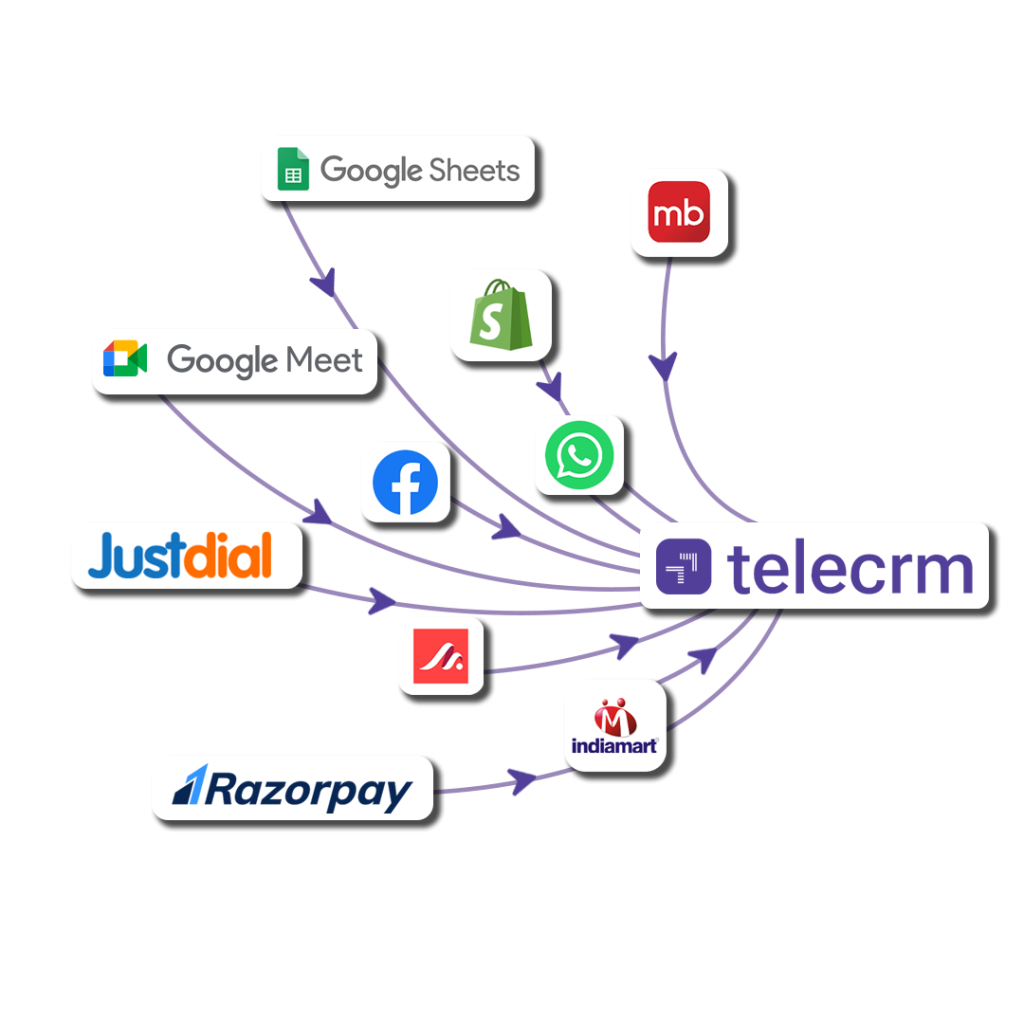
Customers get clear, helpful responses — no matter which channel they use. And your team can work faster, smarter and more confidently.
Related Read: What is CRM? Features, Benefits, Best Options and More!
At first glance, a CRM is just… a CRM, right?
But the way you sell a gym membership to an individual is worlds apart from selling cloud software to a company. One needs quick follow-ups and emotional triggers; the other needs relationship building, demos and detailed proposals.
That’s where the difference between B2C and B2B CRM comes in.
B2C CRM and B2B CRM differ in speed and depth. B2C CRM is built for high-volume, fast, emotional consumer sales. B2B CRM is built for longer cycles, fewer deals and relationship nurturing with multiple decision-makers.
Think of it like this:
Let’s break it down to help you figure out which one actually fits your business.
Feature | B2C CRM | B2B CRM |
Sales cycle | Short and frequent transactions | Longer sales cycles with more negotiations |
Customer base | Large volume of customers with less individual value per sale | Smaller customer base with higher value per customer |
Relationship focus | Focus on mass marketing and quick interactions | Focus on building long-term relationships and networks |
Decision making | Individual consumers make quick decisions | Decisions often involve multiple stakeholders and take longer |
Marketing approach | Product-driven, aiming for immediate appeal and impulse buys | Relationship-driven, often tailored to specific business needs |
Customer interaction | High volume of automated, personalised interactions | More personalised, often one-on-one interactions |
Data management | Manages large amounts of data to segment and target effectively | Deals with complex data often related to business processes and ROI calculations |
If you’re in B2C sales, like real estate, education or eCommerce:
That’s why a B2C CRM focuses on automation, speed and smart segmentation. It helps you manage volume and personalise communication without hiring 5 more sales reps.
In B2B, the game is different:
That’s why B2B CRMs focus more on pipelines, proposals and long-term deal tracking.
To understand which type of CRM you need, ask yourself:
If your sales feel more like DMs, chats and quick follow-ups, you need a B2C CRM.
And if your sales look like scheduled calls, contracts and long discussions, you’re better off with a B2B CRM.
To get the most from a B2C CRM, follow a few practical habits:
A B2C CRM matters because consumer sales run on volume and speed. It turns scattered customer data into clear actions, so no enquiry is missed and every message feels personal.
Four reasons stand out:
Book a demo today and see it in action for yourself!
B2C CRM is customer relationship management software built for selling to individual consumers. It captures leads, segments customers and automates follow-ups across calls, WhatsApp, email and ads, so teams can handle high volumes personally.
B2C CRM is built for high-volume, fast consumer sales with automation and segmentation. B2B CRM is built for fewer, higher-value deals with longer cycles, multiple decision-makers and relationship nurturing.
Common examples include sending a baby-care offer to a recent diaper buyer, an exam-season discount to a student, or a ‘still interested?’ message to a quiet lead. The CRM automates these based on customer data.
In B2C markets teams handle large lead volumes and buyers expect fast, personal replies. A CRM matters because it tracks every enquiry, automates follow-ups and segments customers, so no lead is lost and messaging stays relevant.
The best fit depends on your channels and team size. For Indian B2C teams selling through calls and WhatsApp, telecrm suits well, while HubSpot and Zoho fit teams that rely more on email and website chat.
Yes. A B2C CRM tracks browsing, carts and purchases, then triggers offers and reminders. It can spot that carts fill around payday and time promotions, or re-engage shoppers who left without buying.
Connect your lead sources, import and clean existing contacts, build customer segments, set up follow-up automation, assign leads to reps and review reports. Most consumer teams can set this up in a day.
Yes, once you handle more leads than you can follow up by hand. A B2C CRM captures every enquiry, sets reminders and automates messages, which helps a small team compete without hiring more reps.


© Copyright 2026 telecrm.in (Flamon Cloudtech Pvt Ltd) - All Rights Reserved • Privacy Policy • T&C



© Copyright 2026 telecrm.in - All Rights Reserved • Privacy Policy • T&C